google.com, pub-8985115814551729, DIRECT, f08c47fec0942fa0 Free Printable Lesson Plans: Search results for earth day
Showing posts sorted by relevance for query earth day. Sort by date Show all posts

Free printable conservation and endangered species lesson plans for Earth Day

one of the last now-extinct passenger pigeons in captivity

Hello my friends of the Omschool! Are you enjoying your Spring Break and Easter holidays? In this lovely month of April, we celebrate Earth Day, which replaces the original holiday Arbor Day (Tree Day). For the past years April has also come to be celebrated as Earth Month, culminating with official Earth Day, April 22 on the Spring Equinox. 

To explore this important holiday, here's a free printable environmental science and endangered species booklet Save our Species, with information, activities and coloring pages exploring endangered species in the US. The purpose of Earth Day is to celebrate our earth, educate people and explore ways to protect natural resources. Protecting our earth includes supporting our animals, plants, habitats and ecosystems. Earth Day reminds us that we rely on the earth for sustenance and the earth relies on us for care and safety. 

Understanding endangered and threatened species helps us to learn better ways to care for our environment as a whole. The EPA has developed a free printable 28 page environmental science activity and coloring booklet entitled Save Our Species. This free printable endangered species resource book is perfect for Earth Day. It has been developed for and provided to the public as an educational information guide. On Earth Day, and all Earth Month, students can explore endangered and threatened species in the United States, by coloring the animals, plants and habitats. 

This free printable environmental science activity book can be used as a field guide or zoo field trip planner. This booklet includes free printable coloring pages of endangered species and threatened species (species whose habitats are being encroached upon and destroyed). It explores 16 species of endangered animals in the United States and five threatened species.

Black-Footed Ferret saved from extinction


Spotlight: The Black-Footed Ferret

One highlight of the Save Our Species booklet is the Black-footed Ferret. Once thought to be extinct, this resilient creature is making a comeback through careful conservation efforts. Sharing success stories like this in the classroom offers students a sense of hope and shows them that environmental protection really works!

Here's a unit on animal extinction lesson plans which explores the annihilation of the passenger pigeon population. This planned extinction is unique in endangered species in that it happened so quickly. An entire bird species was wiped out in a matter of years. Here is a website called Revive and Restore which endeavors to de-extinct lost species. So far, the gene editing process has not been successful which shows just how true is the maxim "extinct is forever." 

John Ball Zoo, in Grand Rapids, Michigan has extensive free printable Zoology lesson plans. There are science lesson plans on migrations, animal habitats, conservation and a host of other animal related activities. Featured animals are monarch butterflies, penguins, lions, chimpanzees, hummingbirds and more. 

Massasauga Rattlesnake


Local Spotlight: The Eastern Massasauga Rattlesnake

In our own backyard near Grand Rapids, the John Ball Zoo is doing vital work to protect Michigan’s only venomous snake. The Eastern Massasauga is a "threatened" species that relies on our local wetlands. Teaching students about these misunderstood neighbors is a great way to explore local biodiversity and the importance of habitat preservation!

Additionally, local initiatives in Native Planting to boost populations by planting Michigan-native species Eastern Hemlock or Spruce, in schoolyards or home gardens to support local wildlife. Michigan has struggled with invasive species, some of which, like purple loosestrife, were planted as ornamental flowers and ended up taking over wetlands and destroying the entire ecosystem. The golden loosestrife beetle was introduced to eradicate this rampant invasive species. Replanting original native species helps restore balance to Michigan's precious natural resources, including the precarious dune structure. 

These free printable environmental science resources make an excellent Earth Day tool for classroom, homeschool, scouting, 4H and any organizations dedicated to the preservation of natural resources. The website includes a free printable Save Our Species poster and lesson plans for teachers and homeschoolers. Decorate the school hallway for Earth Day by assigning each student to color a certain number of endangered species images. Place a large map on the wall and arrange endangered and threatened species pictures around the map with arrows pointing out areas to which the endangered species is native.

Use these endangered species lesson plans to raise awareness to our vital yet fragile ecosystems and to the importance of protecting them. Here is a final thought from teacher Omi who has loved the Lake Michigan dunes and beaches for decades. 


Dune Icon: The Great Lakes Piping Plover

If you’ve ever walked the beaches at Sleeping Bear Dunes or along the West Lake Michigan shore, you may have seen areas roped off with "psychological fencing." These protect the nests of the Piping Plover, a tiny shorebird that is a true conservation success story. Once down to just 17 pairs in the 1980s, the population hit a record 88 nesting pairs in 2025! These birds are so well-camouflaged that they look like "stones with legs." Protecting their nesting sites doesn't just save the birds; it preserves the wild, undeveloped beauty of our dunes for everyone to enjoy.

Free printable earth science lesson plans, craft projects and activities for Earth Day


Hello my Omschooligans! Teacher Omi (that's grandma in Dutch) here to wish you Happy Earth Day! 
April 22 celebrates Earth Day, formerly called Arbor Day. It's such an important holiday that the entire month of April has come to be known as Earth Month. Do you need free printable Earth Day lesson plans for science class? Use these linked science activities in school classrooms, homeschool, scout troops, 4H and environmentalist clubs. And keep reading for a really nifty craft project to practice the four Rs of Earth Day--reduce, reuse, recycle and repurpose.

EPA (Environmental Protection Agency) has free printable Earth Day activities. Print a cartoon-style graphic novel workbook entitled "On the Trail of the Missing Ozone." Students study atmosphere, the importance of the ozone layer and what we can do to protect it. Print in black and white so kids can color the booklet. Use in the science classroom, homeschool or for homework.

EPA Recycle City features interactive games, lessons, activities, printables and online resources for kids. Students explore recycling, landfill dangers, methane gas, trash, wildlife, environmental conditions and much more. Children learn many ways to help protect the earth. This website had activities on biology, earth science, life science and health. Use these resources all during Earth Month.

  • Reducing Tip: swap worksheets for erasable white boards
  • Recycling Tip: host a school paper drive to collect used worksheets
  • Reusing Tip: print worksheets on the back of collected paper
  • Repurposing Tip: Make new paper from scraps! 
🌿 Eco-Craft Project

DIY Handmade Seed Paper

Turn your old junk mail and scrap paper into beautiful, plantable stationery!

  1. Tear & Soak: Rip scrap paper into 1-inch squares. Fill a bowl with warm water and let them soak for 30 minutes until soft.
  2. Blend to Pulp: Place the wet paper into a blender with extra water. Pulse until it looks like a thick, watery soup (pulp).
  3. Form the Sheet: Dip a mesh screen into a shallow tub of water. Pour your pulp evenly over the screen and lift gently.
  4. The "Seed" Secret: While the pulp is still wet, sprinkle tiny wildflower seeds over the surface and press them in lightly.
  5. Dry & Set: Press a dry cloth over the pulp to squeeze out water. Flip the sheet onto a towel and let it dry for 48 hours.
Pro-Tip: Use a heart-shaped cookie cutter on the screen to make plantable "Earth Hearts" for your garden!

now

📚 Further Reading:

EPA Students has free printable science lesson plans geared to upper elementary, middle school and high school students also. There are printable science games, coloring pages, booklets and worksheets. There are educator resources and homework helps, too. This comprehensive website features cross-curricular, multidisciplinary, hands-on science activities.

Planet Pals has lots of free printable science worksheets, lessons, games and activities. Planets Pals features an interactive online club format.

🧑‍🏫 Teacher Omi's Pro Tip

"When introducing the complex concept of Earth’s Composition, simplify it for young learners by connecting the layers to familiar parts of the body:"

  • The Crust: Is the Earth's "Skin"—our protective, thin outer layer.
  • The Mantle: Think of it as the "Muscles"—the powerful, moving layer beneath the skin.
  • The Core: Is the Earth's solid "Bone"—the strong, dense center that holds everything together.

California Academy of Sciences has a free printable earth science activities. There are lessons on different environmental features. These activities focus on the following topics. I've included more metaphors to connect earth features to the human body. 

  • Rocks (igneous, metamorphic, sedimentary). Rocks are the bones of our planet.
  • Minerals (quartz, silica sand, crystals, MOS Hardness Scale, cleavage, color, mineral identification). Minerals are earth's tendons.
  • Water (ground water, aquifers, watershed, water cycle, precipitation, percolation, wetlands, acid rain, bodies of water, oceanography, polar ice caps). Water is our earth's lifeblood.
  • Soil (structure, layers, decomposition, fossils, fossil fuels, composting). Soil is the muscular system.
  • Geophysics (geology, plate tectonics, magnets, earthquakes, volcanoes, the Ring of Fire, thermodynamics, geysers). Geophysics is the endocrine system. 
  • Ecology (land use, deforestation, slash and burn farming, fallow periods, water testing, soil evaluation). Think of ecology like healthcare for the earth. What we put into or do to our bodies heal and sustains or hurts and destroys. Likewise, what we do to our earth either helps or harms it. Environmental groups are like the earth's physicians. 
 May your Earth Day and every day be filled with joy and wonder in our wonder-filled world!

Free Printable EPA Endangered Species Activity Book for Earth Day


Earth Day, which replaces the original holiday Arbor Day is celebrated in the United States on April 22. Here's a free printable environmental science booklet, Save our Species, with information, activities and coloring pages exploring endangered species in the US. The purpose of Earth Day is to celebrate the earth, educate people and explore ways to protect natural resources. Protecting our earth include supporting our animals, plants and habitats. Earth Day reminds people that they rely on the earth for sustenance and the earth relies on them for care and safety. Exploring and understanding endangered and threatened species helps us to learn better ways to care for our environment as a whole.
The EPA has developed a free printable 28 page environmental science activity and coloring booklet entitled Save Our Species. This free printable endangered species resource book is perfect for Earth Day. It has been developed for and provided to the public as an educational information guide. On Earth Day, and all Earth Month, students can explore endangered and threatened species in the United States, by coloring the animals, plants and habitats. This free printable environmental science activity book can be used as a field guide or zoo field trip planner. This booklet includes free printable coloring pages of endangered species and threatened species (species whose habitats are being encroached upon and destroyed). It explores 16 species of endangered animals in the United States and five threatened species.

Save our Species is available to download and print online or may be ordered free of charge as a bound booklet. Further environmental science and endangered species lesson plans are available at EPA. This free printable environmental science resources makes an excellent Earth Day tool for classroom, homeschool, scouting, 4H and any organizations dedicated to the preservation of natural resources. The website includes a free printable Save Our Species poster and lesson plans for teachers and homeschoolers. Decorate the school hallway for Earth Day by assigning each student to color a certain number of endangered species images. Place a large map on the wall and arrange endangered and threatened species pictures around the map with arrows pointing out areas to which the endangered species is native.

Free printable endangered species coloring pages and lesson plans for Earth Day


Earth Day, which replaces the original holiday Arbor Day is celebrated in the United States on April 22. Here's a free printable environmental science booklet, Save our Species, with information, activities and coloring pages exploring endangered species in the US. The purpose of Earth Day is to celebrate the earth, educate people and explore ways to protect natural resources. Protecting our earth include supporting our animals, plants and habitats. Earth Day reminds people that they rely on the earth for sustenance and the earth relies on them for care and safety. Exploring and understanding endangered and threatened species helps us to learn better ways to care for our environment as a whole.

The EPA has developed a free printable 28 page environmental science activity and coloring booklet entitled Save Our Species. This free printable endangered species resource book is perfect for Earth Day. It has been developed for and provided to the public as an educational information guide. On Earth Day, and all Earth Month, students can explore endangered and threatened species in the United States, by coloring the animals, plants and habitats. This free printable environmental science activity book can be used as a field guide or zoo field trip planner. This booklet includes free printable coloring pages of endangered species and threatened species (species whose habitats are being encroached upon and destroyed). It explores 16 species of endangered animals in the United States and five threatened species.

Save our Species is available to download and print online or may be ordered free of charge as a bound booklet. Further environmental science and endangered species lesson plans are available at EPA. This free printable environmental science resources makes an excellent Earth Day tool for classroom, homeschool, scouting, 4H and any organizations dedicated to the preservation of natural resources. The website includes a free printable Save Our Species poster and lesson plans for teachers and homeschoolers. Decorate the school hallway for Earth Day by assigning each student to color a certain number of endangered species images. Place a large map on the wall and arrange endangered and threatened species pictures around the map with arrows pointing out areas to which the endangered species is native.

Free Printable Endangered Species Coloring Pages

Earth Day, which replaces the original holiday Arbor Day is celebrated in the United States on April 22. Here's a free printable environmental science booklet, Save our Species, with information, activities and coloring pages exploring endangered species in the US. The purpose of Earth Day is to celebrate the earth, educate people and explore ways to protect natural resources. Protecting our earth include supporting our animals, plants and habitats. Earth Day reminds people that they rely on the earth for sustenance and the earth relies on them for care and safety. Exploring and understanding endangered and threatened species helps us to learn better ways to care for our environment as a whole.
The EPA has developed a free printable 28 page environmental science activity and coloring booklet entitled Save Our Species. This free printable endangered species resource book is perfect for Earth Day. It has been developed for and provided to the public as an educational information guide. On Earth Day, and all Earth Month, students can explore endangered and threatened species in the United States, by coloring the animals, plants and habitats. This free printable environmental science activity book can be used as a field guide or zoo field trip planner. This booklet includes free printable coloring pages of endangered species and threatened species (species whose habitats are being encroached upon and destroyed). It explores 16 species of endangered animals in the United States and five threatened species.

Save our Species is available to download and print online or may be ordered free of charge as a bound booklet. Further environmental science and endangered species lesson plans are available at EPA. This free printable environmental science resources makes an excellent Earth Day tool for classroom, homeschool, scouting, 4H and any organizations dedicated to the preservation of natural resources. The website includes a free printable Save Our Species poster and lesson plans for teachers and homeschoolers. Decorate the school hallway for Earth Day by assigning each student to color a certain number of endangered species images. Place a large map on the wall and arrange endangered and threatened species pictures around the map with arrows pointing out areas to which the endangered species is native.

Free Printable Earth Day Lesson Plans and Activities

April 22 celebrates Earth Day, formerly called Arbor Day. It's such an important holiday that the entire month of April has come to be known as Earth Month. Do you need free printable Earth Day lesson plans for science class? Use these linked science activities in school classrooms, homeschool, scout troops, 4H and environmentalist clubs.
EPA (Environmental Protection Agency) has free printable Earth Day activities. Print a cartoon-style graphic novel workbook entitled "On the Trail of the Missing Ozone." Students study atmosphere, the importance of the ozone layer and what we can do to protect it. Print in black and white so kids can color the booklet. Use in the science classroom, homeschool or for homework.
EPA Recycle City features interactive games, lessons, activities, printables and online resources for kids. Students explore recycling, landfill dangers, methane gas, trash, wildlife, environmental conditions and much more. Children learn many ways to help protect the earth. This website had activities on biology, earth science, life science and health. Use these resources all during Earth Month.
EPA Students has free printable science lesson plans geared to upper elementary, middle school and high school students also. There are printable science games, coloring pages, booklets and worksheets. There's a science resource page for educators and parents. There are homework helps, too. This comprehensive website features cross-curricular, multidisciplinary, hands-on science activities.
Planet Pals has lots of free printable science worksheets, lessons, games and activities. Planets Pals features an interactive online club format. Children will enjoy interacting as active participants, not just simply passive observers.
For more Earth Day resources and free printable activities, visit my blogs: Free Printable Lesson Plans and Science Experiments and Chemistry Activities

10 Science lesson plans from recycled egg cartons


Hello my friends of the Omschool! April is Earth Month
 with April 22 being Earth Day. The purpose of Earth Month is to bring our focus to conservation and preservation of our earth's natural resources. When Teacher Omi was young we called this Arbor Day (aka Tree Day) and a common activity was to plant a tree. Earth Day has been expanded to include the many areas in which we can practice earth-healthy activities like conservation (also called ecology). 

Teachers and homeschool parents, there are so many great environmental lesson plans you can use to celebrate Earth Month. My favorite Earth Day activities include practicing ways to reduce, reuse, repurpose and recycle the many items we use in our everyday lives.  We teachers have a special responsibility to teach earth-friendly habits in how we ourselves repurpose found materials, reduce waste and consumption of resources, reuse items on unique ways and recycle every possible scrap. Because while we focus on these disciplines particularly in Earth Month, we need to be  demonstrating them all year long. 

Probably the most effective recycling lesson plan is to used recycled trash as classroom materials. I like to use a visual such as a trash bag filled with reused items, to show students how much landfill waste we saved. You can make it a game or personal challenge to students to see how many ways they can repurpose, reuse, reduce and recycle. Assign them to list in science journals how many conservation activities they completed each day. 

And when it comes to materials for craft projects and lesson plans, your recycle bin is your best friends. I've got loads of ideas to share on how to reuse various recycled items but today I'll focus on the ubiquitous egg cartons. Here are some ways that teachers and students can repurpose recycled egg cartons as science experiments, science games and science crafts.  This will save money and reduce pollution. 


Attribute sorting science activities and games

Sensory exploration is the core of science and a key component of preschool and Montessori education. Students can practice sensory exploration in hands-on science games. To play, pass out clean, recycled egg cartons--paper, plastic or Styrofoam-- with each section labeled with words or pictures of attributes. Attributes listed will depend on materials being sorted and science subjects being studied. Items may be sorted by color, shape, size, living/non-living, wood/metal/plastic, etc. You can play this as a scavenger hunt in which students search for objects--preferably recycled-- to fit each attribute category. Labeling and sorting materials into recycled egg cartons builds science vocabulary, adjective usage and description.

Sensory Exploration sorting science games for preschool lesson plans

Sort edible items by:

   *Taste: Sweet, sour, salty, bitter, fruity, tart

Sort edible and non-edible by:


   *Smell: spicy, bitter, sour, soapy, flowery, fruity, moldy, metallic, woodsy, earthy

   *Touch: furry, fuzzy, smooth, cool, warm, hard, rough, scratchy, bumpy, squishy, sticky

   *Sound: squeak, ring, buzz, beep, pop, clang, snap, crackle, scrape, scratch

Ecology experiments using recycled egg cartons.

Paper or Plastic? Use cardboard and Styrofoam recycled egg cartons to demonstrate what happens to both in a landfill. Place a piece from each carton in water and soil put them in the window. Note any changes to each over time. Use this to explore biodegradable materials and renewable resources for Earth Month. Discuss how pollution is an environmental hazard and harms plants and animals.

Geology science experiments for Earth Month:

Use recycled egg cartons to classify and identify rocks and minerals. Here are free printable rocks and minerals identification charts to download and use. Here's are more free printable rocks and minerals guides with beautiful color illustrations. Students should label the sections of recycled egg cartons and sort by:

hardness on the MOHs hardness scale (use this free printable MOHs scale)
rock type (metamorphic, sedimentary and igneous)
mineral composition (calcite, silicate, carbonate, etc.)
uses (building, abrasion, decoration, chemistry, etc.)

Eco-Friendly Printing Tip

Since you’re already repurposing egg cartons, here’s a quick tip to keep the rest of your science lesson just as sustainable:

Pro Tip: To save paper and reduce waste, print your worksheets and charts on the blank side of used paper. To save on ink, print in grayscale (black and white) unless the images are essential, and select the lowest saturation or "draft" setting on your printer.


Biology science games

Label the sections of recycled egg carton science crafts with taxonomy classifications from the kingdoms (plantae, animalia, etc). Use these free printable animal taxony charts. Students might sort by subcategories 

KPCOFGS (kingdom, phylum, class, order, family, genus, species). 

Students might cut out pictures or make tiny cards with names of members of various groups. Then they can sort pictures or words into categories. They can test each other in partners or in groups. Label the bottom of the egg carton with answers for self-checking. This can be adapted to any age or grade depending upon what you are studying.

Quick Tip: Mastering the Taxonomy Hierarchy

Memorizing KPCOFGS (Kingdom, Phylum, Class, Order, Family, Genus, Species) can be tricky for students. Use this classic mnemonic to help them remember the order from largest group to smallest:

"King Philip Came Over For Good Soup"

  • Kingdom

  • Phylum

  • Class

  • Order

  • Family

  • Genus

  • Species


Systems science crafts. Most all science experiments are based on a system or cycle. Use recycled egg carton science crafts to make 3D flow charts or graphic organizers Places objects in each section to represent parts of the cycle and draw arrows to show how they interact. Demonstrate electrical current, the water cycle. food chains, human body systems, habitats, plant development and insect metamorphosis.

Science Timelines. Use recycled egg cartons to demonstrate how things change and develop (or regress) over time. Make timelines of science inventions, transportation, etc. Use this with any area of science that you teach.


Students find science experiments boring when they engage in same-old activities. These homemade science crafts and science experiments will challenge and intrigue students while also providing opportunities to practice vital conservation and ecology skills. The simple act of recycling works to improve all aspects of conservation: deforestation, global warming (climate change) from greenhouse gasses, over-consumption. We even practice wildlife preservation every time we reuse, repurpose or recycle instead of discard! And that improves all our lives. 

Free printable Dr. Seuss Lorax science lesson plans for Earth Day


Dr. Seuss’s  book "The Lorax" is the perfect book to read for Earth Day as it explores  corporate waste, pollution and lack of environmentally friendly practices. Here are environmental science activities from The Lorax. Use these literature-based Lorax lesson plans for Earth Day lesson plans and crafts. Start with free printable Lorax activities and Dr. Seuss lesson plans.

Text to Life Dr Seuss lesson plans. The Lorax is a parable or allegory. Characters represent ideas or people. As you read the Lorax ask students to decide who these characters represent: The Once-ler (corporations, society, people), The Boy (children, the future generation), The Lorax (God, Mother Nature, a Supreme Being).

Lorax story maps. After reading The Lorax, students should design environmental science diagrams to show food web and pollution impacts charts. Show in sequence how each species relies on the Trufulla trees. These could be drawn in cartoon format or as flowcharts. Now show backwards, how the Once-ler's factory takes out not only too the Trufulla trees away, but pollutes the air and water and harms the animals and plants. Here are endangered species printables to show what that looks like in real life.

Explore environmental science vocabulary from the Lorax--sustainable, ecology, symbiotic relationship, biodegradable, environment, pollution, interdependence, interconnected, food web, food chain, carbon footprint, carbon cycle, Make 3D graphic organizers by folding paper into 6 parts. for sequenced cartoon strip. Make a sequence book by accordion folding a wide strip of paper. On each page or frame, students write a word or sentence explaining what damage the factory created and how it affects each animal group. Or make a circle chart to show how nature is interconnected, by folding paper circles in six parts. Here are free printable habitat dioramas.

Environmental science experiments. Plant seeds. Here's an excellent text to life connection. Do as the Lorax and Once-ler advised and plant trees. Sprout seeds in simple terrariums by placing dried beans and wet paper towel in Ziploc bags. Or put carrot tops in water. Show how seeds need clean air and sun to grow. Place one seedling in a dark, dusty room such as a broom closet and others in the sun. Water some but not others. Compare results.

Writer's Workshop Dr. Seuss lesson plans. April is National Poetry Month. Write poems for Earth Day, telling what will happen "unless" people stop polluting and start caring for the earth. Or write an Earth Day song about why it is important to keep our world green. Draw shape poems, writing each line or sentence in the shape of the sun, trees, fish, birds, etc. The Lorax says he "speaks for the trees for the trees have no voice." Have children make posters, poems and songs to advocate for the trees.

Environmental science field trips and experiments. Go on a litter hunt. Take before and after pictures of the playground, woods or roadside. Give each student a recycled plastic bag and latex or plastic gloves. Count, weigh and measure how much trash was collected in 15 minutes. Chart and graph different kinds of litter and show what kinds of trash is most commonly thrown out. Start a recycling club. Take a field trip to visit a wildlife refuge, native tribal council, DNR station, nature center, fish hatchery or nature preserve. Wherever you live in this wide wonderful world, there are places to explore the wildlife in your area and folks committed to sharing their love of nature with students.

Environmental science skits. Students should write skits on reducing pollution and litter. Or retell The Lorax story. Explore the internet for new ways to reuse trash. For example, communities in Michigan create green eco-friendly park benches to made entirely from recycled plastic milk jugs.

Design a bird feeder, watering station and bird house. Use recycled materials like milk jugs. Compost food scraps. Or make bird seed cakes. Explore local songbirds in your area. Here are George Washington Carver printables with recycling ideas from the Reduce-Reuse-Recycle King himself!

Homemade hats for kids: Earth Day recycled trash crafts with free printable paper hat patterns


Got kids Covid quarantined kids with stuck-at-home-itis? Got rainy-day, can't go out to play bored kids? Or, maybe you're looking for recycled trash crafts for Earth Day on April 22? If so, here's my teacher-mama first aid kit. Homeschool parents and teachers, your recycle bin is your best bud for hands-on eco-friendly, eco-nomical lesson plans. Repurpose and reuse household stuff in nifty, thrifty crafts, games and activities. Today's recycled trash crafts feature homemade hats for kids with hours of preschool dress up fun! Here's a guide plus links to free printable paper hats (this link goes to Enchanted Learning, another bestie for homeschool teacher-mamas and papas!)

The first prototype for these homemade hats was developed by our oldest daughter at 20 months old. We kept her blocks and toys sorted in recycled 5 pound peanut butter pails. One day, Little Miss emptied one, plopped it on her head, tucked handle under chin and voila—an instant helmet. Then she proceeded to saddle up and ride baby brother like her noble steed! After I removed the bucket handle for her safety and her from brother for his, I realized what really cool hats for kids can be made with a little repurpose and reuse ingenuity! 

Weed through your recycle bin for plastic ice cream buckets, butter tubs, coffee canisters you can repurpose and reuse. Size them so they fit child's head without any leftover. You don't want hats to completely envelop the child's face. You can repurpose and reuse milk jugs as awesome knight's helmets. Remove handle and use hole from the handle as a helmet visor. Cut a piece of plastic and attach with brads to make a visor flap.

Let children paint color, cover and decorate homemade hats however they wish. Wrap in aluminum foil for an armored helmet. Or have young inventors make hats, helmets and headpieces for robots, soldiers, aliens, animals, astronauts. Make homemade crowns for kings and queens and princesses (cut both ends out to make cylinder shape and decorate. Make cone-shaped medieval lady hats by rolling a square of paper in a funnel shape. Trim edge even. Staple recycled crepe paper streamers to hat. Cut decorations from recycle bin stuff. Repurpose and reuse old headgear in cute homemade hats for kids costumes. Repurpose and reuse silk flowers, fabric scraps, ribbons, yarn, buttons, appliques, and faux gems as decorations for your recycled crafts. Kids might wear their hats in an Earth Day parade! 

SS42 has lots of free printable paper hats for kids in several styles--baseball hats, hats with monster heads (zombies, vampire, spider web and pumpkin). There are free printable paper animal hats with noses and bills to go with animal costumes and a paper bucket hat to design and color yourself for Hat Day. Here are free printable paper hat patterns like the pointy party paper hats that attaches with a rubber band. 

My grampa was a newspaper printer. He always made newspaper hats for me and my kids (probably where my little hat maker got her inspiration).  In "Curious George Rides a Bike" George shows an easy way to make paper hat patterns or paper boats from newspaper. Here's his free printable paper hat pattern you can incorporate into reading lesson plans or activities for Earth Day. I think I'll make one in Grampa's memory! 


St. Patrick's Day party lesson plans, crafts, activities to celebrate green

Here's a nifty unit of activities for St. Patrick's Day: lesson plans to celebrate all things green! I've tailored these lesson plans for classroom or homeschool, and ages toddler and preschool through grade 3. I've included St. Patrick's Day party activities, green themed food and snacks, games, crafts and printables. There are many earth science extensions for Earth Day too. 

Green themed snacks and food for St. Patrick's Day party: 

Make a green fruit and vegetable tasting tray. For hands-on biology science activities, explore plant parts of green veggies and fruits. Make a chart to show what plant part each comes from. Draw a large tree showing roots below the ground. The use these free printable coloring pages for fruits and vegetables to color, cut and paste pictures on the tree. 

Roots: sprouts, scallions (tops), fennel bulb
Stalk (trunk) celery, green onions, dill weed, asparagus
Leaves: lettuce, brussels sprouts
ts, kale, spring mix, arugula, spinach, cilantro, mint, watercress, 
Seeds: green beans, peas, edamame, 
Flower: Broccoli, broccoflower: flower 
Fruit: cucumber, kiwi, green grapes, green beans, zucchini, chayote squash (also called mirliton in southern states), green apples, pears, acorn squash

Students will enjoy making green lime yogurt pops by freezing yogurt in popsicle makers. Or freeze limeade or pistachio pudding. 

St. Patrick's party games: 

Play Red light/Green Light (basically stop and go). Extend with safety lesson plans. Discuss that green represents "safe" or "go" in online, cyber and traffic safety. Make traffic safety road signs to test children. Use these free printable traffic signals and road sign coloring pages. 

St. Patrick's Day green themed crafts

Discuss earth friendly ways to keep the earth green. Encourage kids to think reduce, reuse, recycle and repurpose. Challenge them to make "green machines" that are both eco-friendly and green in color, from the recycle bin. 

Toddlers and preschool students will like to color these free printable spring coloring pages. Here are free printable flower coloring pages too. Be sure to print on scrap paper from the recycle bin. Use low ink settings for the most eco-friendly printing. Assemble into a poster to display. 

Have children make collages from recycled magazines of pictures of things that are green. For really earth friendly green crafts, use materials from the recycle bin. Toddler and preschool children will love finding green items in magazines. 

Plant herb seeds in recycled jar or plastic dish (holes poked in the bottom for drainage) from recycle bin. 

Earth Day green outdoor activities

Go on a nature hunt and look for spring signs of new life: nests, buds on trees, green plant shoots, flowers beginning to sprout, grass growing, baby leaves on trees. Pay special attention to things that are green. Kids should bring a nature journal where they can draw pictures of what they observe. 

Collect litter and trash for proper disposal. Be sure kids wear nitryl gloves and masks when collecting litter. Adults should collect any glass. 


Recycle bin Easter egg crafts to teach early math--with free printables


With Earth Day (now actually Earth Month) around the corner, I'm sharing lesson plans to make crafts from your recycle bin. Today we're making recycle bin Easter egg crafts to teach early math activities of sorting and matching, plus fine motor skills. These Easter egg crafts were inspired by my toddler grandchildren, Juno, Ezra and Emmett. 

As a homeschool mom, I was always looking for toddler high chair activities to keep the youngest busy learning while I did lesson plans with the older kids. Use these Easter egg crafts in math learning centers, as high chair activities or at a toddler picnic table for older more mobile preschoolers. I used one of the small Little Tikes picnic tables with our youngest. I rotated different preschool crafts and hands-on activities for her to work on. You could use the sand and water table also. 

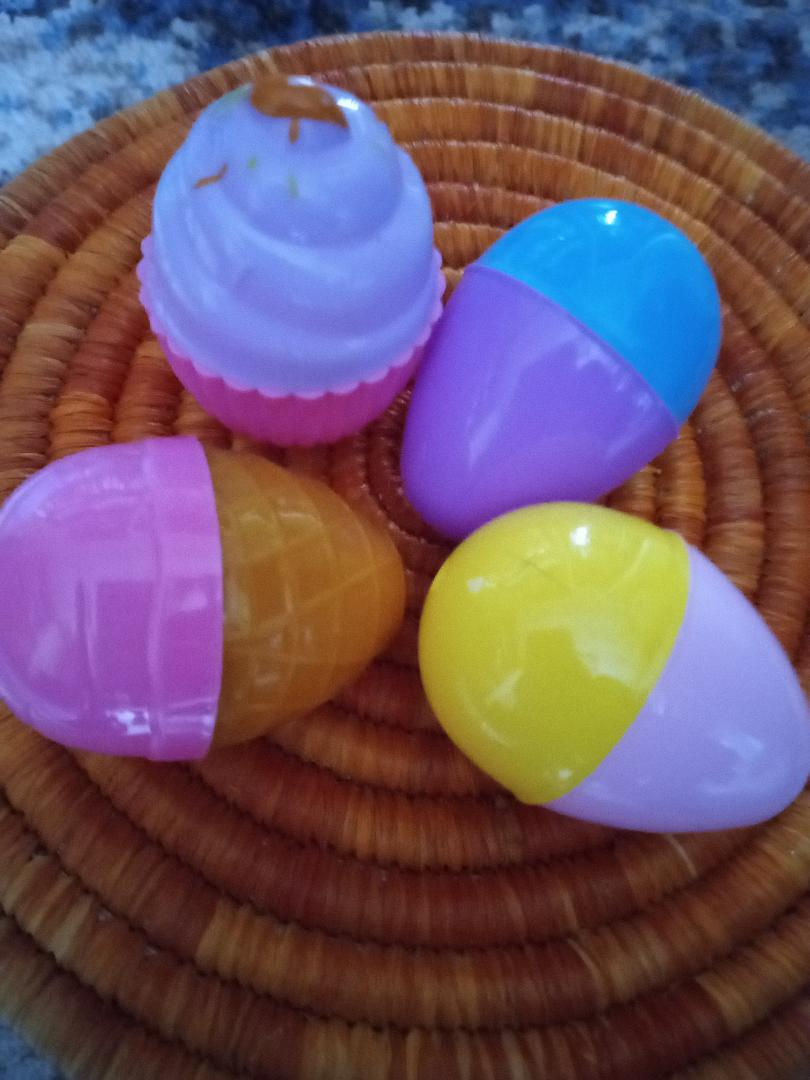
For toddler Easter egg crafts (ages 1-2)  you're only going to need two things, which can be found in your recycle bin: plastic refillable Easter eggs and empty egg cartons. Assemble eggs for 1-year-old children and let them practice sorting into egg cartons. As they get older, children can begin assembling Easter eggs. Then at age 2-ish, they can match egg halves by color or pattern (we have some really cool ones shaped like sports balls, fish and ice cream!) These are great for developing fine motor skills. And saving Easter eggs from year to year is environmentally friendly so prefect for Earth Month. 

Also at age two, or whenever they no longer put things in their mouths, they can begin filling Easter eggs with tiny objects or shapes. Children might cut shapes from recycled cardboard or paper, to practice scissors skills. They might also use shape punches. Extend this into a fun preschool snack craft by giving them little snacks to hide in eggs (fish crackers, letter pretzels, etc.)

Here are free printable Earth Day activities and here's my page of free printable Earth Day lesson plans, crafts and activities. Lastly, here's my collection of lesson plans for Earth Day trash crafts Stay tuned for more Earth Month activities! 


Recycled trash crafts for Earth Day: Book-based endangered animals and habitats


April turns our minds to Earth Day, which has expanded into Earth Month. Build awareness of conservation and reduce, reuse, recycle and repurpose with these recycle bin trash crafts. Today's trash crafts for kids feature book-based animals and habitats, student-designed from the recycle bin. 

Said it before and I'll say it on autoloop, the recycle bin is a teacher's /homeschooler's best friend. Making book-based animals and habitats from the recycle bin teaches students several important lessons about ecology. First, children explore animals and their habitats. If you swing these lesson plans toward endangered species, kids learn how and why animals become threatened or endangered. These earth science lesson plans have social studies connections too. 

Second, making recycled trash crafts teaches kids to reduce, reuse, recycle and repurpose. Making book-based endangered animals and habitat dioramas extends lesson plans to include art, literature, measurement math and inventiveness. Throw in Earth Day poem writing or have students compose a story about the endangered animals and you've got creative writing as well. 

For preschool students, I recommend using any of the Mousekin (Edna Miller), Leo Lionni or Eric Carle books for your book-based animal habitat diorama crafts. Research with children which of the animals is endangered or threatened and why. Both children's authors feature animals in habitats with simple drawings that can easily be created by children with items from the recycle bin. Leo Lionni illustrated his books to look like patterned pieces and scraps. 

Here are some free printable Eric Carle coloring pages and crafts to spur creativity. Here are links for free Leo Lionni resources. Not all work but some are still available. Here are free printable animal habitat activities

To make the animals, put out an assortment of paper and cardboard scraps, plastic, metal and glass packages, cardboard tubes, packing materials, mesh produce bags, foil, plastic lids, etc. Add fabric scraps, buttons, yarn, string and other nifty recycled items. Give students free reign to invent as they wish. 

Happy Earth Day and Earth Month! (The cats shown above are not endangered but they were just too cute not to share). 


Earth Day recycled trash bird feeders: science lesson plans, printables and trash crafts!


Just in time for Earth Day, here are recycled trash crafts for kids, to repurpose and reuse recycled milk jugs as homemade bird feeders. These bird feeders are great for National Bird Day (March 14) also. Make bird feeders in your preschool science learning centers or as part of ecology lesson plans. These recycled trash crafts are cheap, easy to make and fun for all ages.

First, if you're doing these lesson plans as part of homeschool, and you've got some little ones who are bit too young to be interested (grandsons Milo, Lucian and Ezra, Omi is smiling at you here!) you'll want activities to keep them involved. So how about assigning them the task of chief bird researcher (be sure to use the word "chief." The youngest ones love to be the boss sometimes!) Here are free printable bird coloring pages to for them to explore. As much as possible, find ways for youngers to be part of lesson plans. 

Next, teach children that reusing recycled milk jugs help the environment in three ways: when you repurpose and reuse recycled milk jugs you reduce the number that go into landfills. Homemade bird feeders support wildlife and the ecosystem. Making bird seed recipes from recycled kitchen scraps cuts waste. 

To make homemade bird feeders, wash, rinse and dry recycled milk jugs. Next, draw a window on the front of the milk jug on the opposite side from the handle. The window should be about two and one half inches from the bottom and about four inches on all sides. Using everyday scissors cut out the window. The plastic cuts pretty easily, but can be scratchy. You can assist those with physical limitations. After cutting the window, poke 5 small holes in the bottom to drain and air the birdseed and keep it dry. Decorate Earth Day crafts with permanent markers, stickers or fabric paint. Make festive nature patterns.

Now for the bird feeder fodder: here's a great time to explore bird species, habitats and nutritional requirements in your science lesson plans. To attract a variety of critters, fill the feeder up to about 1 and 1/2 inches with various bird seed recipes. You can buy generic bird seed in bulk inexpensively. This will attract chickadees, cardinals, house finch, dark-eyed juncos, sparrows, starlings, blue jays and lots of hungry squirrels. For special bird seed treats, save citrus rinds, apple peelings, fruit seeds, stale popcorn, bread, crackers and nuts. Blend with peanut butter and bird seed and place homemade bird feeder. If you carve a pumpkin, save the seeds. Squirrels will canvas the back yard at Halloween after pumpkin carving to get prized seeds.

Hang the bird feeder crafts in a tree, from poles or just about anything except utility wires. Hang with bird feeders with bright red yarn or ribbon. Many birds love bright red. You can place the feeder on a porch rail if necessary. Put a nail through the bottom to hold it in place. The youngest can be in charge of monitoring bird feeders and helping to refill them. 

Stay tuned for more Earth Day lesson plans, printables and activities!