google.com, pub-8985115814551729, DIRECT, f08c47fec0942fa0 Free Printable Lesson Plans: Search results for learning center
Showing posts sorted by relevance for query learning center. Sort by date Show all posts

Dr Seuss Day activities, lesson plans crafts, printables for learning centers


Hello my friends of the Omschool, teacher Omi (grama) here with free Dr. Seuss Day lesson plans, activities, crafts and printables. The Cat in the Hat doffs his cap on March 2, to honor the birthday of his creator Dr. Seuss (Ted Geisel). To celebrate things Seuss, the NEA (National Education Association) hosts "Read Across America"  on March 2, to kick off March as National Reading Month. You can explore Dr. Seuss and reading in preschool learning centers with these Dr. Seuss activities, perfect for homeschool as well. 

Reading learning center. Dr. Seuss is right at home in the book or library learning center. Fill your book corner with Seuss books. Scatter some comfy pillows and Dr. Seuss character toys (Cat in the Hat, Lorax, Grinch etc). Emergent readers will love the pictures. Visit Seussville for book lists and ideas.  Throw a Seuss story party. Details to follow. 

Dr. Seuss activities for the art center. Display Seuss books: The Cat in the Hat Comes Back, Bartholomew and the Oobleck and How the Grinch Stole Christmas. Each day of Read Across America week, create Seuss inspired artwork. Paint Seuss creatures at easels with brightly colored and neon paints. Model creatures in modeling clay or playdough. Create sculptures by poking recycled materials in Styrofoam blocks. 

To teach Dr. Seuss at the Collage center, make Seuss toys from "How the Grinch Stole Christmas." Put out oddly shaped cardboard containers, egg cartons, aluminum foil and cans, plastic containers and colored fabric scraps. Students can design their own version of toys from Whoville

Jing Tingler

Flu Flooper

Tar Tinkers

Who Hoover 

Who Carnio Flunx 

To teach Dr. Seuss in the Music Center, make homemade musical instruments. Create noise makers like the Grinch's hated 

Gar Ginkers 

Trum Tupers 

Slu Slumkers 

Blum Bloopers 

Who Wompers 

Zu Zitter Carzays. 

Encourage students to give their musical instruments silly Seuss-ish names. 

To teach Dr. Seuss in Dramatic Play or Dress Up center, have students make masks of Seuss characters: Thidwick the Big-Hearted Moose

Horton the elephant

Yertle the Turtle

Maisie the bird

the Wickersham monkeys

Kangaroo and her joey

Have children create their own Seuss creatures. Have a Dr. Seuss parade like the one in his first book "And to Think I Saw It On Mulberry Street." Dress in homemade Seuss costumes, play musical instruments and show off homemade toys. 

To teach Dr. Seuss science center, use the Lorax. The Lorax deals with environmentalism. Set up an experiment on decomposition and pollution. Place different pieces of trash in zippered bags with a little water. Monitor them over time to show students how slowly trash decomposes. Here are more free printable Lorax science lesson plans

Students could also tend "trufulla seeds" (use any flower seeds, sunflower, cosmos or daisy). 

Make Oobleck mixing liquid laundry starch and white school glue. Here are more free printable recipes for Oobleck, moon sand, noise putty, etc. Use for early chemisty lesson plans. 

To teach a Dr. Seuss practical life area, use "The Cat in the Hat", "Green Eggs and Ham" and "Horton Hears a Who." These books deal with caring for others, preparing food and house cleaning. Do a Cat in the Hat tidy up relay race. Cook green eggs and ham. Care for an insect or goldfish. Use these free printable Dr. Seuss activities in your lesson plans, too

Early math lesson plans from the practical life learning center with printables


Hello my dear friends! Teacher Omi (grama) here with some free early math lesson plans. These preschool activities cost nothing because they use materials you already have on-hand, whether you homeschool or teach in a school classroom. Today's math lesson plans come right out of the toybox or in a preschool classroom, the practical life learning center (called the house area in a Montessori set-up). Use them to teach early math skills like sorting, classifying, organizing, patterns and sequencing. 

Setting the table. I love this early math lesson plan for it's nod to nostalgia. When I was young, we learned in a little girl's club I was part of, how to properly set a table, using real dishes, utensils and table linens. That might not seem like a math lesson, or even very important to know. But it's kinda gestalt in that the whole was greater than the sum of the parts. For one thing, it was relaxing and therapeutic, especially for kids (like me) with a high need for orderliness. Now we might be called OCD or even autistic. Then we were just called organized. 

And there was a lot of emphasis on organizing back then which I see less of, today. And this is where the early math and even science and STEM comes in. All these disciplines rely on sorting, sequencing, organizing, classifying, arranging, method and order. There's nothing haphazard about math and science. And the earlier children learn how to do these things, the easier higher math and science will be. 

So how would you use the practical life or house learning center for early math lesson plans? Well, in those learning centers there's always a kitchen set of some kind, with play food and dishes. Teach children to set the table by showing where each item goes. You can get free printable placemats to help with arrangement. 

Early math lesson plans with play food. There are a multitude of ways to use play food in math lesson plans, particularly the kind which is separated into pieces. Have students disassemble food into pieces and then match up again. Encourage them to talk about what they are doing. You might even make it into a memory game. This teaches fine motor skills, eye hand coordination, matching, sorting and verbal skills. 

You can also teach math and science skills by grouping foods according to color, shape, food group, plant part, etc. These preschool activities help children learn about plant science, nutrition, categorizing and noticing details. 

You might have students arrange food on the printable placemat templates to make complete meals. MyPlate has a large section of free printable nutrition lesson plans to teach about food groups, healthy eating, meal planning and much more. 

After children have explored these concepts, end with a tasting party! My grandson Emmett likes to taste the play  food LOL. So we get out the real foods and sample them. And my personal favorite place to start is with fruits and vegetables. So much color, texture and nutritional goodness. Try making a rainbow fruit and veggie plate. 

DIY Sand and Water Table alternatives for homeschool and classroom


 Hello fans of my Omschool blog. I've been a licensed general and special education teacher for 37 years and part of my career work was spent homeschooling our four children. Now, I'm Omi--grandma--to 9 going on 11 and am continuing the homeschool traditions I began, with the second generation as Omschool (Omi's school). Lesson plans are designed with cheap to free materials, many of which are reused, repurposed and recycled. 

For today's lesson plans, we'll create a DIY sand and water table for preschool, special education and lower elementary learning centers. This sand table alternative was developed in our homeschool and works well for small spaces. As budgets are usually tight, whether in public, parochial or homeschool, this is a low cost alternative as well. 

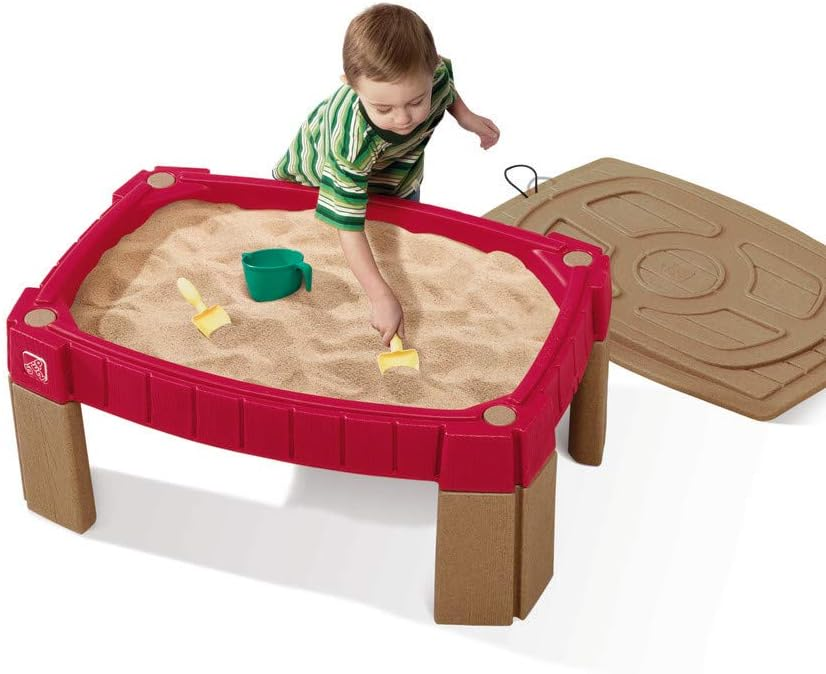
Instead of the expensive sand and water table purchased from school supply companies, I've used a repurposed child's sandbox such as the enclosed Little Tikes turtle sandbox or Step 2 brand sandboxes. The turtle sandbox is washable, portable and covered. It moves easily indoors or out. For an even more budget friendly alternative, get a small plastic wading pool. I've found these as cheap as $7 from Dollar General. Inflatable kiddie pools will work too however they aren't as durable. 

The last sand table alternative is a low sided plastic box or tub with lid. This works very well when space is limited. When learning center activities are done, simply close the box with media and manipulatives inside and stack in the storage area. Here's my blog post on homemade sand toys for the sand table. 

These preschool learning center activities worked very well for our homeschool. I could allow the  youngest children to explore independently while instructing the older children. The DIY sand and water table wasn't just for preschool learning center activities either. The older kids could use it to practice and explore mathematical concepts such as measurement, geometry (volume) and science (sing various media). Sand tables provide excellent sensory experiences. More on sand table filler alternatives later! 

I'm sorry I don't have an image of how this sand and water table fit in our homeschool. But let me assure you the even in our tiny 10x10 room, it fit well! I've linked the picture to Amazon. This small reasonably priced Step 2 sandbox would work perfectly. 

Animal Habitat Diorama Games for Science Learning Centers: Free printable animal classification and taxonomy lesson plans

Children explore animal habitats in the Omschool

Hello my Omschooligans! Teacher Omi thinking today about ways to make all our activities more engaging and interactive. Over 40 years ago, I started teaching in a Montessori school and created these hands-on activities for preschool and elementary classroom learning centers. I'll share a series on ways to create preschool learning centers in classroom or homeschool settings. Today we focus on ways to explore animal habitats and biomes in preschool social studies and science learning centers. 

Social Studies/Science learning center connections

When studying different countries or cultures in social studies build in biology and zoology by showing in hands-on ways which animals and plants live in the locations you are studying. Cover classroom walls with educational maps, charts, diagrams and posters. Activity Village is a great resource for free printable world maps, coloring pages and lesson plans from around the world. Here are free printable animal habitat diorama coloring pages and charts. Here are more free printables. 

🌍 Free Printable Habitat Dioramas

  • 3D Triorama Templates: Teachers Pay Teachers offers a free 3D triorama set that includes printable backgrounds and animal cut-outs for Arctic, Forest, Savanna, Ocean, Desert, Pond, and Rainforest habitats.

  • Taiga Biome Project: Little Bins for Little Hands has a dedicated free printable for a Taiga (Boreal Forest) diorama, including trees and specific animals like moose and snowshoe hares.

  • Rainforest Shoebox Background: If you are using shoeboxes for your learning centers, this free rainforest background provides a four-piece printable (left, back, right, and ground) designed specifically to fit.

  • Animal Habitat Sorting: For younger "Omschooligans," this free sorting activity allows children to color and then cut-and-paste animals into their correct environments (Desert, Jungle, Ocean, Arctic).

🔍 Discovery Prompt: Habitat Match-Up

Look at the animals in this diorama. Can you find one that has fur? One that has scales? Why do you think that animal needs that covering to live in this habitat?

🌍 Recommended Free Printable Dioramas

These are excellent, ready-to-use downloads that fit the "hands-on" Montessori style you mentioned:

  • The 3D Triorama Set: This is a fantastic "all-in-one" freebie that includes templates for Arctic, Savanna, Ocean, and Rainforest biomes.

  • Taiga Biome Project: A beautiful, specific printable for the Boreal Forest that includes native animals like moose and snowy owls.

  • Shoebox Habitat Assignment: If you want your students to do a deeper dive, this freebie includes a research page and a rubric for a shoebox project.

  • Habitat Sorting Activity: Perfect for your younger learners, this cut-and-paste set helps them categorize animals by their environment.

Must Love Books! 

It goes without saying that all learning centers should have a bookshelf or basket of books appropriate whatever unit you're studying. DK--Dorling Kindersley makes excellent science reference books and field guides so use those in learning centers. 
📖 Omi's Book Research Challenge

Pick a book from our habitat basket. Can you find a picture of an animal that lives in the Tundra? Now check the Taxonomy Chart in the back of the book. Does that animal have fur or feathers?


📚 Recommended Animal Habitat Bibliography

DK Reference & Field Guides

Habitat & Biome Explorations

🧬 Animal Classification (KPCOFGS) Guide

To help your students visualize the hierarchy, you can use this simple breakdown:

  • Kingdom: The big group (e.g., Animals vs. Plants).

  • Phylum: Does it have a backbone? (Chordata).

  • Class: Is it a mammal, bird, fish, or reptile?

  • Order/Family: Narrowing down by specific traits (like "Carnivores").

  • Genus/Species: The "First and Last Name" of the animal (e.g., Panthera leo for a Lion).

  • Getty Images

Interactive games and hands-on activities for science learning centers. 
🦴 Class vs. Phylum: The Backbone Test

When playing the KPCOFGS game, remember the "Backbone Test":

  • Vertebrates: Mammals, Birds, Reptiles, Fish, and Amphibians are all in the Chordata Phylum.
  • Invertebrates: Insects have no backbone; they belong to the Arthropoda Phylum!

  • Stuffed Animal Sort: Assemble realistic stuffed animals from different animal habitats and biomes in the cultures or countries you're studying. Stuffed animals aren't scientifically correct, but they at least help children understand which creatures live in different animal habitats and regions.

🎲 Animal Classification Bingo: Teacher Calling Cards

  • Cut these out and pull them from a jar, or call out the "clue" to see if children can identify the group!

    • Mammal: "I have hair or fur and feed my babies milk."

    • Bird: "I have feathers and lay eggs in a nest."

    • Reptile: "I have scaly skin and am cold-blooded."

    • Amphibian: "I spend part of my life in water and part on land."

    • Fish: "I use gills to breathe underwater and have fins."

    • Insect: "I have six legs and usually have wings."

  • Animal habitats bingo: Play this game by sorting stuffed animals according to taxonomy class . Make a bingo grid on the floor and label the top with the animal classification. Mammal, reptile, fish, insect, amphibian, bird. Bingo caller calls out an animal and children place it on the chart. You can print animal bingo cards too. 

    🐾 Animal Bingo! 🐾

    Place a marker on the animal group Omi calls out!

    Mammal Bird Reptile
    Fish FREE SPACE Amphibian
    Insect Mammal Bird

    Print this card for your Omschool Science Center!

  • VAKT play: Set out small plastic or resin animals for children to explore using visual, kinesthetic and tactile skills. The ideal kind will have simulated body coverings. Find a book the plays animals sounds and place it with the toy animals so children can connect animal sounds. There are some very realistic toy plastic animals available from local toy and craft stores. Place animals in the biology area where children can sort critters into animal habitats or play KPCOFGS--Kingdom, Phylum, Class, Order, Family, Genus, Species--animal classification bingo games, by sorting these animals into their bingo cards. 

🌍 External Bingo Resources

If you prefer a full-page PDF with photos of real animals for your center, these are high-quality free options:

1. The Five Classes of Vertebrates

  • The most common groups people refer to belong to the Phylum Chordata (animals with backbones). Within this phylum, they are divided into these specific Classes:

    • Mammalia (Mammals)

    • Aves (Birds)

    • Reptilia (Reptiles)

    • Amphibia (Amphibians)

    • Agnatha/Chondrichthyes/Osteichthyes (The three classes of Fish)

2. The Exception: Insects

  • Insects are not in the same phylum as the others. They belong to the Phylum Arthropoda.

    • Insecta is the name of their Class.

🧬 Omi’s Taxonomy Challenge

Can you find the animal’s "address"? Choose a plastic animal from the center. Use our reference books to find out:

  • 📍 Class: Is it a Mammal, Bird, or Reptile?
  • 📍 Order: Does it eat meat (Carnivore) or plants (Herbivore)?
  • 📍 Species: What is its "Scientific Name"?

  • Taxonomy games: In preschool and ECSE (early childhood special education) learning centers, students can play animal taxonomy games that organize animals by body covering and how they give birth to identify class (mammal, fish, bird, insect, reptile, amphibian). 

  • 🧬 Animal Class Reference: Body Coverings & Birth

    Animal ClassBody CoveringHow They Give Birth
    MammalHair or FurLive birth (mostly)
    BirdFeathersHard-shelled Eggs
    ReptileDry ScalesLeathery Eggs
    AmphibianMoist, Slimy SkinSoft, Jelly-like Eggs (in water)
    FishWet ScalesSoft Eggs (usually in water)
    InsectHard Exoskeleton
  • Plant Species and Samples: Collect several plant species, either living or artificial, from different regions for students to explore in the science learning centers. Gather tree bark, seed pods, seeds and seed carriers, leaves and evergreen needles, mushrooms and other plant life. Sort plants by region, biome and animals habitats (woodland, desert, tundra, rain forest, deciduous forest, coastal wetlands, marsh). Students can place appropriate plants within animal classification groups and taxonomy categories. 
  • Rocks and minerals. Collect rocks, geological specimens, minerals and shells from the regions you study in biology and life science. Rock, mineral and shell specimens look best when viewed in water. Put them in an old dishpan in science learning centers or biology area. Provide brushes for the children to clean the samples and provide magnifying glasses for children to explore with. It isn't necessary for children to have expensive, high powered magnifying glasses; cheap, plastic ones are actually better as they get lost and knocked about in classroom use. 
  • Aquarium. Put an aquarium with specimens of plants or animals or animals body parts in science learning centers. Cruelty-free fur samples, exoskeletons, feathers, animals shells, bones, scales, shed snake skin; empty hives and nests, egg shells; many people collect these things and may share them. Identify items by plant biology, taxonomy and animal classification. 
  • Classroom pets: Different schools have different rules for keeping animals in the classroom. Most allow a fish tank or small rodent pet. A fresh and saltwater aquarium, as well as different species of birds, small mammals, fish, reptiles, insects and amphibians would be ideal for a science learning centers. Students create animal habitats for pets. Be sure to post animal classification or taxonomy charts for reference. 

🎨 Omschool Pro-Tip: Layering Learning

"When building dioramas, encourage students to add 'texture' using the items we collected: real tree bark for the forest floor, or sand and small rocks for the desert center. It turns a flat printable into a true sensory experience!"


Recycled trash crafts for kids: Garden tools and sand toys from milk jugs


Hey teachers and homeschoolers, looking for some earth science lesson plans to teach environmental sustainability? How about making recycled trash crafts for kids with plastic milk jugs? Repurpose and reuse milk jugs into sand toys for the beach and garden tools. These crafts for kids work great in preschool science learning center, schools, scout troops, 4H groups, camp and day care and can be made with the youngest learners! 

To make a set of eight recycled trash beach toys or gardening tools, you'll need

-two clean plastic milk jugs per child

-permanent dry-erase marker 

-scissors (children's Fiskars scissors work great)

Draw a line around the base of milk jugs, about three inches from the bottom. Poke a hole anywhere in the line with scissors. Cut along the line to remove the top half (set aside for later). Now you have a sand pail, gardening bucket or plant starter. 

Next make sifter or strainer sand toys or garden tools by poking holes in the bottom of the milk jugs. Recycled trash beach toys are great money-savers. If they get broken, just re-recycle! 

Repurpose and reuse the top of milk jugs to make funnels and sand castle mold beach toys.  Draw a circle around the top, about two inches down from the mouth. Poke a hole and cut around the circle. Use funnels for preschool math learning center or sand and water table, too. 

With the leftover handle piece, make trowel garden tools. Draw along the indentation on the jug where the handle is. Snip the lower end of the handle to separate it form the jug. Poke a hole on the line and cut along the line. Trim the top part above the upper end of the handle to a v-shaped point. You will have a flat surface with a handle to smooth out surfaces and a corner surface for edging. 

Make a small rake and hoe cutting the trowel with a flat edge (for a hoe). Cut it with a zigzag edge to make a a garden rake. These trash crafts provide excellent scissors skills practice.

Make a shovel by drawing a circle around the part where the lower end of the handle attaches to the jug, about an inch or so from the handle. Snip the top end off from the jug. Cut along the circle you've drawn. Now you have handled shovels to use for sand toys or garden tools.

Use garden tools in earth science lesson plans and experiments. Use beach toys in preschool sand and water table learning center. Make a classroom garden or individual student bucket gardens for nature study! 

My favorite way to make crafts for kids is in an intergenerational setting. Visit nursing homes and senior centers to do activities with seniors. Teach students about volunteering, empathy and awareness, with activities that connect kids and elders! Make it part of an Earth Day party! Invite grandparents! This grandma treasures her time spent making craft projects with her beloved grandkiddies! 

Math practice kit activities with printables

 Montessori and Math Their Way teach math in hands-on learning center tasks, as opposed to paper and-pencil lessons. Here's a homemade mini math learning center. Use this shoebox math facts practice kit for independent, on-the-go learning. Retention of math facts and operations is vital for higher math. Use this math homework practice kit to reinforce addition, subtraction, multiplication and division facts.

 Children should practice 5-10 minutes 4-5 times a week. In a shoebox or plastic lidded box, place these items 

--color-coded list of digits. For example: 0-yellow, 1-blue, 2-red, 3-orange, 4-purple, 5-green, 6-brown, 7-pink, 8-black, 9-gray. Some 1,983 would be written blue-1, gray-9,black-8 and orange-3. Color coding helps many students visualize and organize numbers, learn place value and memorize math facts, 

--set of dice. Practice math facts by casting die and adding or multiplying two numbers shown. 

--set of dominoes (base 12 set is best) or homemade"domino"flash cards made from index cards. Write domino dot configuration in number color from chart. Student selects a domino and adds, subtracts or multiplies the two numbers. Write answers on back for self-checking. Here are free printable dominoes

--deck of playing cards--student chooses two cards and adds, subtracts, or multiplies them. Face cards are valued as such:(ace-1, jack-10, queen, 12 and king-0) Here's a free printable deck of playing cards

--math flashcards for each fact family. Purchase at Dollar Tree or discount store. Here are freeprintable math flashcards. Make flashcards by writing math fact (problem) in color code on one side and the answer on the back. 

--pencil, eraser and scrap paper squares--student writes out a fact family, or writes story problems, illustrating with items to represent (three apples times seven apples). Use for pop quizzes also.

 --tablet of small stickers or mini-stamper marker-- Child makes his own flashcards with stickers and scrap paper, for the math facts family on which he's working. 

--100 chart or cheat sheet. Student uses to skip count by different numbers (multiply), look for patterns, or practice facts. Here are free printable 100 charts. 

--yarn strung with 100 plastic beads. This homemade abacus is a great visual for math operations. Give student a problem, like 7x8, She counts out and add seven groups of eight. 

--food snacks with little pieces; fish crackers, breakfast cereal, raisins, candies, pretzels. Students demonstrate math facts with food while eating it. 

Keep math facts practice kit in the car. Use travel time for homework reinforcement.


Medieval history lessons plans: Cardboard castle crafts, princess crafts with printables


I am a self-avowed history fanatic, particularly the medieval period. I also love things princess. And being a teacher, homeschool mom, education blogger and now Omi (gramma), I'm always looking to create hands-on lesson plans.  To that end, here's a guide to making recycled cardboard castle crafts with free printables. Use these are recycled cardboard crafts for kids in many cross-curricular lessons: preschool learning center activities, theater and dress up fun, arts and crafts, STEM and history lesson plans. These medieval crafts include a homemade cardboard castle, costumes and props. Homeschool parents, I promise ways to engage all ages, from baby to teen! 

(Materials are noted in BOLD CAPS within the how-to guide)

1) Make cardboard castle walls. Cut open two large RECYCLED CARDBOARD REFRIGERATOR BOXES along one long side. TAPE (duct tape works best as it resembles grey stone) two boxes together to make an octagon castle "keep." Measure, draw out and cut cardboard castle battlements (great STEM activities). History note: Castle walls had a series of crenellations and merlons (squared edge thingies) along the top. Tim's Printables has free printable recycled cardboard castle patterns for medieval crafts and castle design ideas. Cut cardboard castle keep windows: Draw a four-pane window and cut openings for the princess to look out of. 

2) Decorate recycled cardboard castle. Draw in bricks and family crest to make these medieval crafts for kids look really authentic! For more STEM fun, make moat and drawbridge. Cut drawbridge opening in the side of cardboard castle. Attach YARN or ROPE to both sides of to lower and raise drawbridge. Cut holes in the top to tie drawbridge closed when the royal inhabitants aren't receiving company. Place BLUE BLANKETS around the outside for the castle moat. Fill with STUFFED ANIMALS dragons, fish, alligators and other aquatic creatures. Add some PLANTS to make it more realistic and discuss wetland habitat science. Toddlers and preschoolers can take on the job of gathering and arranging flora and fauna.  

3) Make flags for cardboard castle. Aristocrats and nobles in medieval times had a coat-of-arms or family crest that symbolized their lineage. The design and display of a coat-of-arms is known as heraldry. A coat-of-arms was placed on banners flown when the family was in residence. Banners were carried on standards into battles. Have kids design their royal family crest. Here are free printable heraldry patterns and stencils for medieval crafts for kids. Make banners on  SCRAP FABRIC SQUARES CUT FROM OLD BED SHEETS OR TOWELS. Attach to YARD STICK OR HOT DOG STICK. Draw or paint family crest using MARKERS OR FABRIC PAINT. Older kids can make these as history lesson plans. 

4) Make secret entrances for your recycled cardboard castle (my grandkids favorite part!)  Line chairs up to make a crawl-through tunnel entrance into castle. Drape sheets, blankets and bed linens over tunnel. Establish cardboard castle dungeon. Make a parapet (walkway) by placing several chairs or a bench along the inside edge of the castle. Soldiers keep lookout here and send prisoners to sit under the chairs in the dungeon sit under bench. Fashion a turret. Put a collapsible net laundry hamper upside down on a chair inside the castle. Children crawl into hamper and onto chair to look out of the turret. These are perfect jobs for youngers. They will love exploring, arranging and guarding the cardboard castle as part of their dramatic play learning center activities. 

5) Outfit your royals. Haul out the DRESS UP BIN and collect OLD TOWELS, BED SHEETS AND BLANKETS. Donate JUNK JEWELRY and OLD FANCY DRESS. Make recycled cardboard crown crafts for the princess with these free printable crowns from First-Palette. Use this guide to make a suit of armor cardboard crafts for a knight. More STEM lesson plans! 

6) Equip the keep. The keep is the living area of a castle. Let kids fill their cardboard castle keep with snacks, blankets, pillows, coloring supplies, books and pets. When the novelty of guarding the castle wears off, kids can use it as a cozy play fort. Set your homemade castle up in a place where it can be left up for other rainy day fun or make it convertible to go outdoors on nice days!

Stay tuned for more medieval crafts! Picture is courtesy of Free Coat of Arms (couldn't find my last name, alas!) 

Health lesson plans to prevent juvenile obesity without mentioning weight loss


Increasing juvenile obesity is the elephant in the living room that everyone sees and no one want to address. More and more children are overweight and headed toward obesity. But discussing it or even being concerned about overweight kids is often regarded as fat-shaming or bullying. Here are lesson plans to prevent and treat childhood obesity without ever mentioning weight loss. 

Childhood obesity is tricky to deal with for two reasons. First, in puberty, many tweens get heavier and may even be called overweight by a doctor. But after puberty they slim down. This was my experience. Weight loss diets and calorie restricting may actually be dangerous. Calorie restricting such as the 1000 calorie diet I was put on at age 8, deprived me of nutrients needed for a growing body. It also caused eating disorder issues. Also, the extra weight is necessary for health after we lose weight in puberty. 

What is chronic obesity and what is overweight that will right itself after puberty? There are several factors. Is the entire family overweight? Is the child active or sedentary? How old is the child? A three-year old with obesity is more at risk than, say, a normal weight child who becomes overweight as a tween, as I did. This overweight period is usually temporary. And some kids are just bigger than others. 

Another issue is that overemphasis on weight loss can be a form of fat-shaming and bullying. It can also lead to eating disorders, low self esteem, anxiety and depression.  But yet, children with chronic obesity that will not disappear in puberty, are at risk of many other health problems including diabetes, sleep apnea, hypertension and other issues. Movement and exercise are more difficult. 

So how to prevent or treat juvenile obesity without discussing weight loss? 

1) Food lesson plans aimed at healthy eating. Teach the food pyramid and food groups, using these free printable lesson plans.  Nutriton.gov has many free nutrition printables including recipes, My Plate activities, coloring pages, food diaries and lesson planners. Here are free printable food journals and nutrition trackers. 

2) Engage students in physical activities and active learning as much as possible. Use these free printable DEAM (Drop Everything and Move) activities. DEAM is like DEAR (Drop Everything and Read), which intersperses the school day with unplanned exercise or reading activities. I especially like DEAM because they are random surprise fun activities that get kids out of desks and moving. These might include dancing, calisthenics or active games.

3) Go off screen and hands-on. Most children spend more time watching than doing: TV, online on phones, computers and video game systems. I'm a Shipt shopper and its a sad commentary that when I drive thru neighborhoods in the summer, I see very few children out playing but TVs on or kids playing on phones. Utilize these free printable lesson plans on screen time dangers. Kids Health offers printables and resources to help kids understand why too much inactivity is harmful and how to monitor their screen time. 

4) Provide active activities in lieu of sedentary seat work and workbooks. Montessori type learning centers get kids off the seat and actively learning. Check out this blog for a gajillion learning center activities for science, math, reading, writing, social studies and more. Here are fitness activities to keep kids actively engaged. 

Will these activities end childhood obesity? Not alone. But with support, guidance, education and care, kids can learn to be their  healthiest selves. 


Homemade math facts practice kit for learning on the go


Hello my Omschooligans! With summer right around the corner, it's time to think summer enrichment activities to help children retain content learned over the school year. Math content is sometimes lost over a long  three month summer with no practice. Here's a homemade portable math learning center. Use this shoebox math facts practice kit for independent, on-the-go learning. Retention of math facts and operations is vital for higher math. Use this math homework practice kit to reinforce addition, subtraction, multiplication and division facts.  Children should practice 5-10 minutes 4-5 times a week. In a shoebox or plastic lidded box, place these items 

--color-coded list of digits. For example: 0-yellow, 1-blue, 2-red, 3-orange, 4-purple, 5-green, 6-brown, 7-pink, 8-black, 9-gray. Some 1,983 would be written blue-1, gray-9,black-8 and orange-3. Color coding helps many students visualize and organize numbers, learn place value and memorize math facts, 

--set of dice. Practice math facts by casting die and adding or multiplying two numbers shown. 

--set of dominoes (base 12 set is best) or homemade "domino" flash cards made from index cards. Write domino dot configuration in number color from chart. Student selects a domino and adds, subtracts or multiplies the two numbers. Write answers on back for self-checking. Here are free printable dominoes

--deck of playing cards--student chooses two cards and adds, subtracts, or multiplies them. Face cards are valued as such:(ace-1, jack-10, queen, 12 and king-0) Here's a free printable deck of playing cards

--math flashcards for each fact family. Purchase at Dollar Tree or discount store. Here are free printable math flashcards. Make flashcards by writing math fact (problem) in color code on one side and the answer on the back. 

--pencil, eraser and scrap paper squares--student writes out a fact family, or writes story problems, illustrating with items to represent (three apples times seven apples). Use for pop quizzes also.

 --tablet of small stickers or mini-stamper marker-- Child makes his own flashcards with stickers and scrap paper, for the math facts family on which he's working. 

--100 chart or cheat sheet. Student uses to skip count by different numbers (multiply), look for patterns, or practice facts. Here are free printable 100 charts. 

--yarn strung with 100 plastic beads. This homemade abacus is a great visual for math operations. Give student a problem, like 7x8, She counts out and add seven groups of eight. 

--food snacks with little pieces; fish crackers, breakfast cereal, raisins, candies, pretzels. Students demonstrate math facts with food while eating it. 

Keep math facts practice kit in the car. Use travel time for homework reinforcement.

Puddleglum's Apologia or What's wrong with TV, computer games and screen time?


Hello friends of this free printable lesson plans blog! Teacher Omi of the Omschool blog here and in the New Year, I'm thinking of ways to make activities less "see and hear" and more "do"! Let's explore how we as educators can help kids engage critical thinking skills by watching less--TV, computer, phones, screens--and interacting more. 

I'm a Montessori special educator, grounded in hands-on, learning center based, VAKT, higher order thinking skills education. I'm all about getting kids away from TV and computer screens, off the internet and into real-life learning activities. 

Now this might seem daunting as so much of current educational activity is computer-based. And while working with technology is an important skill, it is one kids can and will learn everywhere. What they engage far less in, and need much more of, is DOING: touching, smelling, tasting and experimenting with. While see and hear shows them things, multisensory experiences teach. 

This is obviously going to take a lot of unpacking, so let's begin by clarifying just what is so wrong about TV, screen and computer based activities. Yes, I did say wrong. It's not just that screens are less effective teachers. They're insidiously dangerous. 

Computer-based activities are less so because at least the child is doing something if only inputting data (the lowest form of  learning). But they're stultifying because they don't teach in real-life ways. They rely on magical thinking, exaggerated characters, lurid colors, artificial sounds, and strangely contrived situations, that completely contrast with a child's experience with the real world. And that doesn't even begin to address the lack of creative thinking, imagination and doing required. (But we will, rest assured!)

What worries me even more are the kids TV shows. All that was bad with the video games and computer activities is magnified 100-fold. An unrealistic computer generated cartoon character behaves in unreal ways that defy the laws of nature. Animals are cute little candy-colored creatures that talk and dress like people. They don't get hurt (at least on realistically). They aren't depicted as they really are. They're "cool" and smart and everything always works out. They fly, leap, bounce off things and never fall. In contrast, a gravity-bound child who is subject to the laws and rules of the real world, feels feeble knowing she can't do that.  

Staring at games or TV shows deadens a child's ability to think for herself or even know that she can. Everything is scripted, spoon-fed and done for her. Nothing is required. She experiences only vicariously. She learns that she doesn't impact her world and is not a participant but just an observer. This creates a sense of helplessness, hopelessness and apathy. 

She also learns that she is not only useless, but worthless. It isn't necessary for her to even watch this or that show. It will still happen. She learns she doesn't matter. She's just the straight man, the schlimazel. When I was a kid, Bugs Bunny and Superman were faulted for making us think we too were invincible. That we could eat gunshot-laden birdseed and not explode. But we didn't watch Superman all day and no one knew what an anvil was or thought to drop it on someone's head. 

And I haven't even touched on the "real-life" TV shows where "real" kids (Ryan's World) and adults (Blippi) play with toys all day and never do anything that normal kids are expected to do. They do whatever they want with no consequences. They never do the boring work or difficult jobs that are a part of life. Rules don't apply. And kids see this and think it's real life and their own lives are what's unreal.

No wonder so many adolescents disappear into video games and don't know how to interact in life. They have been taught that real life is boring and of course it is compared to the fake, Marvel-verse they see on screen. No wonder that so many adults cannot hold down a job or walk down the street without all sorts of adaptations, therapy animals and medications. They have been conditioned to think they are broken, compared to the fake-whole they see on screen. They have been confused by what is real and what is pretend.  No wonder self-harm is so alarmingly prevalent now. 

Factor into that the marketing to (exploitation of ) children through these shows and it's a pandemic that threatens to destroy childhood. Please, for the love of children, pull the plug or at least limit screen time to an hour a day. 

Kids should spend the bulk of their days, running, jumping, pretending to be a train engineer, building forts, having acorn tea parties, making messes and having to clean them up, helping with chores. They'll learn resilience and self-reliance, They feel self-respect when they learn to be bored but behave, running errands without being given a phone to stare at. They should fall and learn they can get back up, dust themselves off and ask for help if needed. 

Most important, children need to learn that they CAN. They can explore, invent, fail, fall, experiment, try again, spill, drop, fix, survive, implement, apologize, interact, get along, try and see, wait, get mad, get disappointed, problem solve and endure. These activities may not look as glamourous as they do on Paw Patrol but they are also not fake. 

I'll end with a quote from Puddleglum, the Marshwiggle to the Green Lady (Witch) in "The Chronicles of Narnia" "The Silver Chair." The Witch was gaslighting Puddleglum and the children into believing that her dark underworld was the real one and that the world they described was imagination. Puddleglum said, after being tortured (*wipes tears)

"Suppose we have only dreamed, or made up, all those things-trees and grass and sun and moon and stars and Aslan himself. Suppose we have. Then all I can say is that, in that case, the made-up things seem a good deal more important than the real ones. Suppose this black pit of a kingdom of yours is the only world. Well, it strikes me as a pretty poor one. And that’s a funny thing, when you come to think of it. We’re just babies making up a game, if you’re right. But four babies playing a game can make a play-world which licks your real world hollow."

#Respect! And that's how I see TV vs. real life. Real life isn't perfect. We aren't perfect. We stumble and don't always do it right. We aren't always brave. We can't fly and we feel pain. But for all that, it beats a fake, computer-generated world "hollow"! 

Thanks for reading. I'll post more about this later. 


DIY recycled cardboard playhouse with cardboard appliances kids can make themselves


Hello my Omschooligan friends! Teacher Omi is so excited about spring and I hope you are too! Today n this beautiful May Day, let's make some recycled cardboard crafts for kids! We made a recycled cardboard castle, play store and puppet theater a few days ago. Today we're making recycled cardboard playhouses. Use these in homeschool, preschool and just for outdoor fun! These free printable lesson plans include fort or house making rubric plus a guide to making appliances for your recycled cardboard playhouse

Montessori connections to recycled cardboard playhouse craft project for kids

Preschool children are wonderfully imaginative. If you give them an old box and tell them to pretend it's a car, they will enjoy hours of fun in their Maserati. Kids don't need a  expensive pre-made playhouse to have fun. You can make a recycled cardboard playhouse easily. In fact, teachers and parents, you can create entire Montessori preschool practical life learning centers for home or school, with just a refrigerator box, available in dumpsters behind appliance stores. 

Safe cardboard cutting and construction guide for kids

Here is a guide on how to help children safely cut and craft with cardboard:

1. Age-Appropriate Tools

Selecting the right tool depends on the child's age and fine motor skills.

  • Safety Scissors (Ages 3–6): Standard blunt-tip or plastic children's scissors work well for thin cardboard, cereal boxes, or index cards.

  • Corrugated Cardboard Scissors (Ages 6+): Specialized heavy-duty craft scissors (such as Westcott Right Shears) can cut through single-wall corrugated cardboard without the danger of an open blade.

  • Adult-Only Tools: Box cutters, craft knives, and heavy shears should only be used by adults to prep the cardboard or score difficult cuts.

2. Safe Cutting Techniques and Setup

Teaching proper handling ensures the process remains fun and injury-free.

  • The "Away" Rule: Teach children to keep their free hand firmly on the cardboard at a safe distance from the blade, always cutting away from their body and fingers.

  • Stable Surface: Place the cardboard on a flat, non-slip surface, such as a self-healing cutting mat or a sturdy craft table, rather than holding the piece in the air while cutting.

  • Punching Starter Holes: For window cutouts or internal shapes, have an adult use a craft knife to make a small hole first. This allows the child to insert their safety scissors safely without forcing the blade through the material.

3. Alternative Joining and Shaping Methods

Sometimes, avoiding sharp tools entirely is the safest way to let children craft independently.

  • Cardboard Scoring: To fold or bend cardboard, an adult can lightly score the line with a box cutter, allowing the child to fold it easily along the line with their hands.

  • Cardboard Fasteners: Use safety-conscious alternatives to connect pieces, such as tape, low-temperature glue guns (supervised), or brass fasteners and paper brads.


💡 Pro-Tip

Safety First: Keep a non-slip mat under the cardboard to prevent sliding, and encourage children to take frequent hand-resting breaks when cutting through thicker materials!

Recycled cardboard craft project value added

First a word on recycled cardboard appliances boxes-they are wonderful tools for Montessori preschool play. They are eco-friendly, versatile, sturdy enough for children to play in and recyclable when you're finished with it. My father made me an entire cardboard playhouse full of furniture, with recycled cardboard boxes. Here's how to make a cardboard playhouse for Montessori preschool practical life learning centers. 


How to make a cardboard playhouse

This is not meant to be a permanent structure; but the tape will prevent the cardboard box wall from collapsing. There is no need for a roof or ceiling. Children understand the concept and will be able to imagine a ceiling. 

  1. Cut the refrigerator box along one of the long edges. 
  2. Open the box and flaps of both ends. 
  3. Place refrigerator box upright around one corner of the room, flaps toward the floor. 
  4. Alternate flaps, one in, then the next facing outward (to form a base). 
  5. Arrange the cardboard playhouse so that it encloses the corner. 
  6. Invert refrigerator box so printing faces inward. 
  7. Duct tape edges of cardboard to the walls and tape flaps to floor.
  8. Cut a window or two in the sides of the box. 
  9. Cut window panes and curtains and color them in. 
  10. Or staple scrap fabric to make curtains. 
  11. Draw a flower box on the outside or make a little rack to place real plants. 
  12. Cut a door that opens and closes or cut a doorway and hang a piece of cloth like a curtain. 
  13. Place old green and brown towels along the bottom of the cardboard playhouse to look like earth and grass and to mask the edges. 
  14. Draw a doorbell or attach a bicycle bell.
  15. Inside your Montessori preschool practical life learning centers, place a doll cradle with assorted dolls, child-sized table and chairs,
  16. Keep reading for tips on how to make recycled cardboard kitchen appliances.
  17. Add play food and pretend dishes
  18. Repurpose a coat rack as a costume rack for the house area costumes. 
  19. Set up artificial trees and flowers to lend verisimilitude
  20. Inside the house, put a basket of books that pertains to the subject you're studying. 
  21. Add comfy throw pillows. This makes your Montessori preschool practical life learning centers into a quiet reading or library learning centers.


Recycled cardboard sink for playhouse

When I was young, my parents made an entire play house for me from recycled cardboard boxes. 

  • To make a play sink, tape a cardboard box closed on all sides
  • Cut slits in the box. 
  • Insert a small plastic dishpan or pink tub like hospitals send patients home with.
  • Push tub down into the hole you cut. Cardboard frame will hold the tub in place and create a 'sink'. 
  • Make faucet, spout and handle for your play sink from two recycled dispenser bottles. Foaming hand soap dispensers look the most realistic. 
  • Cut small holes in the back of the box sink. 
  • Drop dispenser pieces into the holes so that just the top pump part shows through. 
  • Tape dispenser tube inside box so it doesn't wobble. 
  • Children can pretend to run water by pressing pump dispenser (be sure to say "shhhh" to imitate water sound!)
  • Or make pretend handles. Make discs of cardboard, clay or cork. 
  • Cover with duct tape. Punch hole in center. 
  • Insert old pencils or straws. 
  • Cut a hole in the back of the cardboard near faucet. 
  • Insert straws/pencils and tape to back inside of box. 
  • Label "hot" and "cold." 
  • Rotate discs like knobs. 
  • Place recycled dish soap bottle on sink. 
Note: the image doesn't show exactly how the "hot" and "cold" should look. Place them behind the pumps. 
Recycled cardboard refrigerator

  • Use a tall rectangle box placed upright for refrigerator about the size of a vacuum box. 
  • Duct tape pieces of cardboard to make a shelves. 
  • Place an old plastic dishpan or plastic box in the bottom for a vegetable drawer. 
  • Cover all cardboard surfaces with contact paper and seal edges with duct tape so cardboard appliances last longer. 
  • Place small clothing rack near the play kitchen to hang aprons and chefs hats. Dress up is important in child's play.

Here's the quick printable outline:

The Refrigerator Box Playhouse

  • Benefits of Refrigerator Boxes: Sturdy, versatile, green, and recyclable.

  • Step-by-Step Construction Guide:

    • Cut the refrigerator box along a long edge.

    • Open the box and flaps at both ends.

    • Place upright around a room corner with flaps toward the floor (alternating the base flaps inward and outward).

    • Invert so the printing faces inward, and duct tape the edges to the walls and floor for stability.

  • Customization and Detailing:

    • Cut windows and attach curtains (using colored paper or scrap fabric).

    • Draw a flower box or add a small rack for real plants.

    • Create a swinging door or a doorway with a cloth curtain.

    • Use green and brown towels at the base to represent grass and earth.


II. Montessori-Style Integration

  • Learning Centers: Practical life learning centers for home or school.

  • Furnishing the Playhouse:

    • Doll cradle with dolls.

    • Child-sized table and chairs.

    • Play kitchen furniture, food, dishes, and costumes.

    • Artificial trees and flowers for realism.

  • Reading Nook Conversion: Add a basket of theme-related books and throw pillows to convert the playhouse into a quiet library.

III. Cardboard Appliance Tutorials

  • Time Commitment: Under an hour per appliance.

  • Basic Materials Needed: Cardboard boxes, box cutter/scissors, paint pens, assorted plastic lids from vitamin bottles or milk,  dishpans or tubs, duct tape, and soap dispenser pumps.

  • Play Sink Construction:

    • Tape a box closed and cut a hole for the sink basin.

    • Insert a small plastic dishpan and secure it with the cardboard frame.

    • Create the faucet and handles using foaming hand soap dispensers and inserted straws/pencils.

  • Play Refrigerator Construction:

    • Use a tall, upright rectangular box.

    • Add interior cardboard shelves secured with duct tape.

    • Include a plastic box/dishpan at the bottom for a vegetable drawer.

    • Cover surfaces with contact paper and seal the edges with tape.

  • Additional Accessories: Place a small clothing rack nearby for aprons and chef's hats to encourage roleplay.

Here are my tutorials for