google.com, pub-8985115814551729, DIRECT, f08c47fec0942fa0 Free Printable Lesson Plans: preschool
Showing posts with label preschool. Show all posts

DIY Recycled Cardboard Fort, Play Store and Theater crafts for kids


Hello Omschooligans and welcome to another day of recycled cardboard craft projects with teacher Omi! Here at the Omschool, we're celebrating Earth Month by making crafts for kids using recycled cardboard. Today we're making a transformable recycled cardboard puppet theater, playhouse, play store and and cardboard forts. Use these Earth Day cardboard crafts for kids in preschool learning centers to teach science, dramatic play and art. 

What you'll need:

These crafts for kids require recycled cardboard but you'll want to make sure that there are many kinds of recycled items: 

  • glass jars
  • plastic containers
  • Styrofoam pieces
  • metal cans
  • grocery items 
You'll also need: 

  • a recycle bin (teacher Omi's best friend for hands-on lesson plans!)
  • scissors
  • stapler
  • glue
  • markers
  • tape 
Now just add some children and voila--an Earth Month of crafts for kids! 

Recycled cardboard fort walls

Show children how to open cardboard boxes and attach them together to form large sheets for roof and walls of cardboard forts. Reinforce cardboard forts with taped on sticks, yard sticks, rulers, recycled plastic straws, etc. Hold recycled cardboard walls upright and tape one stick on both sides, at angles, from wall to floor. These temporary props keep walls from toppling. 

Cardboard fort windows

Cut windows in recycled cardboard play fort walls. Staple old towels or scrap fabric to windows for curtains. Paint cardboard fort exterior or drape with large blankets, sheets, tablecloths or curtains. Create a village of forts where children can visit back and forth. Let them fill forts with pillows, stuffed animals, books and snacks. 

Recycled cardboard play store

Repurpose cardboard forts into a play store. 

  • Tape recycled cardboard shelves to inside by making hinges (tape one piece under the shelf and one on top, by making an L shape and attaching both to wall and shelf). 
  • Collect food packages, cans, bottles, boxes and containers from the recycle bin. Assemble them on play store shelves. 
  • Students should design a sign to entice customers. 
  • They can make fake checks, credit cards and play money. 
  • Bag play store groceries in recycled grocery bags. 
  • Create a scanner "gun" from a plastic water pistol. Remind kids to say "beep" when checking out groceries for their customers. 

Recycled cardboard crafts: play theater


Instruction Card: The Transformable Puppet Theater


Project: Recycled Play TheaterPrep Time: 15 minsDifficulty: Medium
Materials:Tools:Yield:
1 Large Appliance BoxUtility Knife/Scissors1 Tabletop or Floor Theater
Old Curtains or FabricDuct Tape
Tension Rod or StringMarkers/Paint

Instructions

  1. Prepare the Base: Select a large cardboard box. If using a refrigerator box, keep it upright. If using a smaller shipping box, open the top and bottom flaps to create a "tunnel."

  2. Cut the Stage Window: On the front side of the box, draw a large rectangle about midway up (eye level for the "puppeteers"). Carefully cut this out to create your stage opening.

  3. The Proscenium Arch: Decorate the area around the window with paint or markers. You can glue on cardboard "scrollwork" or a marquee sign at the top.

  4. Install the Curtains: * Option A: Poke two holes on either side of the window inside the box and thread a piece of clothesline through.

    • Option B: Use a small tension rod wedged inside the box frame.

    • Hang your scrap fabric or old towels to act as the stage curtain.

  5. Backstage Access: Ensure the back of the box remains open so the "actors" can crawl in and out easily.

  6. Stabilize: If the theater feels wobbly, use the "Plus-Sign" method from your fort-building section: tape a yardstick or heavy cardboard strip diagonally across the interior corners.


The Show Must Go On! 

  • Have students write a play to put on in their theater.
  • Write a script and cast characters. 
  • Make costumes, props and scenery from the recycle bin.
  •  Haul out the instruments and make the play into a musical or opera. 
  • Choreograph a dance number.

✂️🖍️✂️🖍️✂️🖍️✂️🖍️✂️🖍️✂️ Omi’s Pro Tip: Use the leftover cardboard scraps from your Stage Window to make handheld props like magic wands, swords, or flowers for the actors to hold! 🖍️✂️🖍️✂️🖍️✂️🖍️✂️🖍️✂️🖍️


Project: Recycled Stage SceneryPrep Time: 10 minsDifficulty: Easy
Materials:Tools:Yield:
Flat Cardboard SheetsMarkers or Tempera Paint2-3 Background Flats
Cardboard Tubes (Paper Towel)Tape or Hot Glue
Sponges (for texture)Utility Knife

Instructions

  1. Select Your Setting: Decide if your play takes place in a "Magic Forest," "Outer Space," or a "City Street."

  2. The "Flat" Method: Take a large, flat piece of cardboard. Draw the outline of your main feature (like a giant tree or a skyscraper). Cut it out carefully.

  3. Make it Stand Up: * The Tube Stand: Cut a slit into the top of two paper towel tubes and slide the bottom of your cardboard scenery into the slits.

    • The Easel Back: Tape a triangular scrap of cardboard to the back of your scenery to act as a kickstand.

  4. Add Texture: Instead of just coloring, use old sponges to dab paint onto trees for leaves, or glue on crumpled bits of green tissue paper for a 3D effect.

  5. Reversible Sets: Paint a "Day" scene on one side of your cardboard and a "Night" scene on the other. You can flip it over during "intermission"!


Omi’s Pro Tip: Remind the children to design "Tickets", "Programs" and a "Showtimes" sign to post on the outside of the theater to encourage more dramatic play!

Early math lesson plans from the practical life learning center with printables


Hello my dear friends! Teacher Omi (grama) here with some free early math lesson plans. These preschool activities cost nothing because they use materials you already have on-hand, whether you homeschool or teach in a school classroom. Today's math lesson plans come right out of the toybox or in a preschool classroom, the practical life learning center (called the house area in a Montessori set-up). Use them to teach early math skills like sorting, classifying, organizing, patterns and sequencing. 

Setting the table. I love this early math lesson plan for it's nod to nostalgia. When I was young, we learned in a little girl's club I was part of, how to properly set a table, using real dishes, utensils and table linens. That might not seem like a math lesson, or even very important to know. But it's kinda gestalt in that the whole was greater than the sum of the parts. For one thing, it was relaxing and therapeutic, especially for kids (like me) with a high need for orderliness. Now we might be called OCD or even autistic. Then we were just called organized. 

And there was a lot of emphasis on organizing back then which I see less of, today. And this is where the early math and even science and STEM comes in. All these disciplines rely on sorting, sequencing, organizing, classifying, arranging, method and order. There's nothing haphazard about math and science. And the earlier children learn how to do these things, the easier higher math and science will be. 

So how would you use the practical life or house learning center for early math lesson plans? Well, in those learning centers there's always a kitchen set of some kind, with play food and dishes. Teach children to set the table by showing where each item goes. You can get free printable placemats to help with arrangement. 

Early math lesson plans with play food. There are a multitude of ways to use play food in math lesson plans, particularly the kind which is separated into pieces. Have students disassemble food into pieces and then match up again. Encourage them to talk about what they are doing. You might even make it into a memory game. This teaches fine motor skills, eye hand coordination, matching, sorting and verbal skills. 

You can also teach math and science skills by grouping foods according to color, shape, food group, plant part, etc. These preschool activities help children learn about plant science, nutrition, categorizing and noticing details. 

You might have students arrange food on the printable placemat templates to make complete meals. MyPlate has a large section of free printable nutrition lesson plans to teach about food groups, healthy eating, meal planning and much more. 

After children have explored these concepts, end with a tasting party! My grandson Emmett likes to taste the play  food LOL. So we get out the real foods and sample them. And my personal favorite place to start is with fruits and vegetables. So much color, texture and nutritional goodness. Try making a rainbow fruit and veggie plate. 

Hands-On Preschool math and science lesson plans with play food, with free printables


Hello teacher Omi here with more free printable lesson plans from the Omschool! Today we are going to talk about how to use children's toys and common household objects to create interactive, Hands-On lesson plans for preschool, in your classroom or homeschool. Here's an idea to use play food to teach early math skills like sorting, symmetry and matching. These activities build fine motor and STEM skills as well. 

I recently bought some play food for the grandchildren to play with at their kitchen set at our house. Most play food now comes pre-cut. Children can use a knife to "cut" food into pieces and then reassemble by attaching velcro pieces. The bananas corn on the cob are "peelable" too. Use these as an easy matching game. This can be adapted for children ages 18 months through preschool and kindergarten. It's perfect for children with special needs, too.

For the youngest learners, (Omi is looking at you, Remus and Emmett! And Flora you'll be there soon too) simply have them separate the pieces or separate them for children. Then they match up the two halves. For older children (hello Juno and Ezra), put all the pieces in a basket and have them sort to find matching pieces. You can also play a memory game with kids of all ages (that's you, Lucian, Lola, Milo, Moses, Silas and Henry!) by placing food halves randomly on a grid you've made on a board. Cover each and have students uncover two at a time till they find the matching pieces. 

Students can also sort food by food group, color or plant part (in the case of fruits and vegetables. So this activity does does double duty as science lesson plans. 

Here are some more free printable matching activities (Education.com) and Memory games to print (Busy Bee Kids) for your classroom or homeschool. And check out Enchanted Learning which has 1000s of free printables with banner ads. You can also subscribe for the  nominal fee of $29 a year to print banner-free. If you subscribe for three years, it's only $69 which is almost a full free year. They offer school district pricing too. 

Homemade sand and water table fillers for preschool learning centers


Hello Omschool blog friends! Teacher Omi here with another post in my series on the venerable preschool sand and water table. What's a sand and water table (also called sand table)? It's a low child-sized table with tubs that can be filled with materials for children to explore. The sand table is the backbone of preschool science activities in learning centers. Early childhood special education classrooms use a sand table for hands-on, sensory, tactile stim and interactive lesson plans to build cognitive and perceptual development. 

In my previous post, we looked at sand table alternatives to the expensive models in many preschool learning centers. These homemade sand tables feature repurposed, recycled and reused materials. Select the best sand and water table alternative to fit your classroom or homeschool needs, Then use these sand table fillers in science activities for early childhood lesson plans.

Water: Fill tubs with water to make a water table. Add floating toys and bath tub toys. Here are free printable lesson plans to make homemade water and sand toys from your recycle bin. Provide different sized containers that encourage children to practice pouring and measuring. Place revolving water wheels in the water table. Add some items that sink and some that float. Use water table for hands-on exploration with the scientific concepts of flotation, water displacement, density and specific gravity. Create a "Does it sink or float?" chart. Here's a free printable chart. 

Bubbles: Make a simple bubble solution with water, lemon Joy dish soap and glycerin for sturdy bubbles. Add bubble making toys and every day household gadgets: apple corer, egg beater, whisk, egg slicer, slotted spoon, fork, cone shaped applesauce mill and any other safe gadgets for water science activities in learning centers.

Rocks and seashells: Fill your sand table with water and sand. Add rocks, seashells and old (sanitized) recycled toothbrushes. Children can scrub shells and rocks with toothbrushes. Shells and rocks are best seen in water, which brings out their hidden depths. Children will love exploring the intricate beauty of shells and rocks.

Shaving Cream: Allow children to squirt shaving cream into water table tub. Concentrated gel shaving cream is lots of fun because it foams up as it sprays. Teach safety so kids don't get soap in their eyes. Exercise caution with aerosol cans. It may be advisable to have an adult add the shaving cream. Encourage finger painting and drawing in shaving cream. Make sure children wash their hands after doing science activities in learning centers.

Snow: Fill the sand table with snow and add plastic sand shovels, trowel, ice cream scoop, melon baller, recycled plastic cups and containers for molding and shaping snow. Have children to wear gloves and keep several pairs near the water table.

Recycle bin paper scraps: Place scrap paper in sand table tubs and add scissor with patterned edges and paper punches. Children love to snip, trim, cut and punch paper. Exploring with paper in the sand table keeps scraps in one place. This exercise provides good practice in cutting skills, scissors skills, eye-hand coordination and fine motor skills.

Dried beans or rice: Add plastic measuring cups, spoons and cups with pour spouts. Teach children about measurement math. Preschool children can practice counting, sorting while getting good tactile stimulation in learning centers.

Aquarium Fish tank rocks: Buy bags of multicolored aquarium fish tank rocks (the small kind that line the bottom of the tank). Fish tank rocks make excellent media for pouring, scooping and measuring. Aquarium rocks also don't draw insects like beans and rice. Beads work well in the sand table, too, but can be expensive. Explore other materials for your sand table science activities.

Picture is a very special grandson, mucking about with his homemade silly putty! 


DIY Sand and Water Table alternatives for homeschool and classroom


 Hello fans of my Omschool blog. I've been a licensed general and special education teacher for 37 years and part of my career work was spent homeschooling our four children. Now, I'm Omi--grandma--to 9 going on 11 and am continuing the homeschool traditions I began, with the second generation as Omschool (Omi's school). Lesson plans are designed with cheap to free materials, many of which are reused, repurposed and recycled. 

For today's lesson plans, we'll create a DIY sand and water table for preschool, special education and lower elementary learning centers. This sand table alternative was developed in our homeschool and works well for small spaces. As budgets are usually tight, whether in public, parochial or homeschool, this is a low cost alternative as well. 

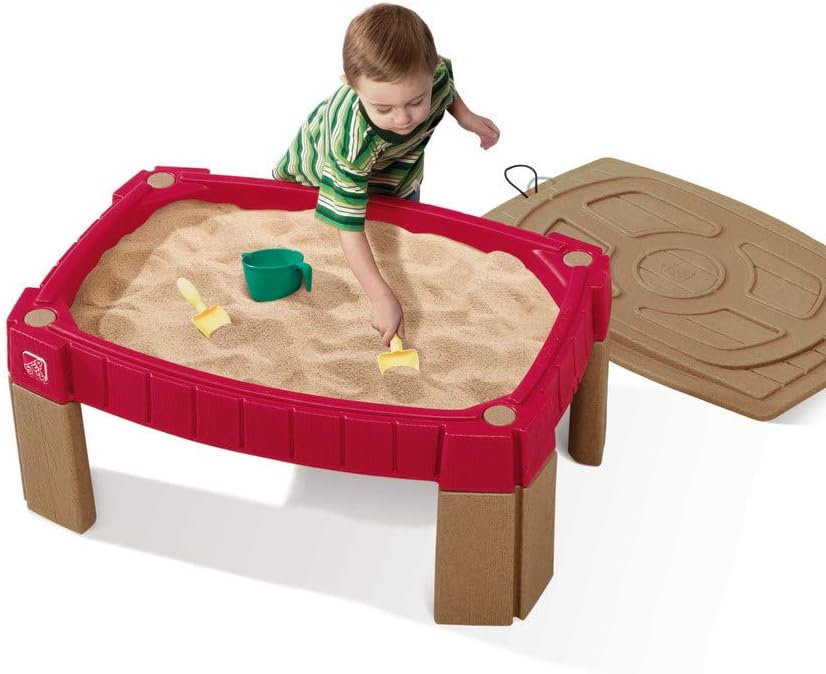
Instead of the expensive sand and water table purchased from school supply companies, I've used a repurposed child's sandbox such as the enclosed Little Tikes turtle sandbox or Step 2 brand sandboxes. The turtle sandbox is washable, portable and covered. It moves easily indoors or out. For an even more budget friendly alternative, get a small plastic wading pool. I've found these as cheap as $7 from Dollar General. Inflatable kiddie pools will work too however they aren't as durable. 

The last sand table alternative is a low sided plastic box or tub with lid. This works very well when space is limited. When learning center activities are done, simply close the box with media and manipulatives inside and stack in the storage area. Here's my blog post on homemade sand toys for the sand table. 

These preschool learning center activities worked very well for our homeschool. I could allow the  youngest children to explore independently while instructing the older children. The DIY sand and water table wasn't just for preschool learning center activities either. The older kids could use it to practice and explore mathematical concepts such as measurement, geometry (volume) and science (sing various media). Sand tables provide excellent sensory experiences. More on sand table filler alternatives later! 

I'm sorry I don't have an image of how this sand and water table fit in our homeschool. But let me assure you the even in our tiny 10x10 room, it fit well! I've linked the picture to Amazon. This small reasonably priced Step 2 sandbox would work perfectly. 

Recipes for homemade crayons using recycled broken crayons


With Earth Day, and Earth Month, fast upon us, I'm looking at ways to reduce, reuse, recycle and repurpose .Making crafts with recycled materials from the recycle bin is an excellent way to teach Earth Day eco-friendly habits. Here's are activities to use up those leftover broken crayons. Repurpose them as new crayons with these simple science activities. 

Have students gather broken crayons and peel off outer paper. You'll be making new palm held crayons similar to the egg crayons. These are popular in special needs or preschool classrooms use to help children who aren't quite ready for the stick crayons. Palm or egg crayons help toddlers, preschool and special needs kids develop fine motor skills while still enjoying coloring activities. 

Once you have pile of peeled crayon pieces, spray old recycled muffin tins with cooking spray. Use mini muffin tins for preschool and older children and large ones for toddlers as mini shaped crayons might look edible to toddlers. Have students place assorted bits of broken crayons in each tin. Aim for a rainbow of colors in each cup. Help kids place muffin tins in oven and heat to 200. Heat till crayons on melted but still chunky. Swirl with toothpick while warm if you wish. Place crayon melts in refrigerator till hardened then turn out of pan and enjoy coloring.

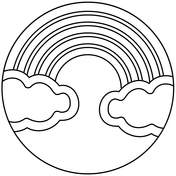
Be sure to only use recycled muffin tins for crafts, and not cooking, once you've done this activity. This is a great way to repurpose old muffin tins and give them new life. Use these free printable rainbow coloring pages to make beautiful spring crafts. Print coloring pages and printables on scrap paper from recycle bin for green, Earth Day ecofriendly activities. 

St. Patrick's Day party lesson plans, crafts, activities to celebrate green

Here's a nifty unit of activities for St. Patrick's Day: lesson plans to celebrate all things green! I've tailored these lesson plans for classroom or homeschool, and ages toddler and preschool through grade 3. I've included St. Patrick's Day party activities, green themed food and snacks, games, crafts and printables. There are many earth science extensions for Earth Day too. 

Green themed snacks and food for St. Patrick's Day party: 

Make a green fruit and vegetable tasting tray. For hands-on biology science activities, explore plant parts of green veggies and fruits. Make a chart to show what plant part each comes from. Draw a large tree showing roots below the ground. The use these free printable coloring pages for fruits and vegetables to color, cut and paste pictures on the tree. 

Roots: sprouts, scallions (tops), fennel bulb
Stalk (trunk) celery, green onions, dill weed, asparagus
Leaves: lettuce, brussels sprouts
ts, kale, spring mix, arugula, spinach, cilantro, mint, watercress, 
Seeds: green beans, peas, edamame, 
Flower: Broccoli, broccoflower: flower 
Fruit: cucumber, kiwi, green grapes, green beans, zucchini, chayote squash (also called mirliton in southern states), green apples, pears, acorn squash

Students will enjoy making green lime yogurt pops by freezing yogurt in popsicle makers. Or freeze limeade or pistachio pudding. 

St. Patrick's party games: 

Play Red light/Green Light (basically stop and go). Extend with safety lesson plans. Discuss that green represents "safe" or "go" in online, cyber and traffic safety. Make traffic safety road signs to test children. Use these free printable traffic signals and road sign coloring pages. 

St. Patrick's Day green themed crafts

Discuss earth friendly ways to keep the earth green. Encourage kids to think reduce, reuse, recycle and repurpose. Challenge them to make "green machines" that are both eco-friendly and green in color, from the recycle bin. 

Toddlers and preschool students will like to color these free printable spring coloring pages. Here are free printable flower coloring pages too. Be sure to print on scrap paper from the recycle bin. Use low ink settings for the most eco-friendly printing. Assemble into a poster to display. 

Have children make collages from recycled magazines of pictures of things that are green. For really earth friendly green crafts, use materials from the recycle bin. Toddler and preschool children will love finding green items in magazines. 

Plant herb seeds in recycled jar or plastic dish (holes poked in the bottom for drainage) from recycle bin. 

Earth Day green outdoor activities

Go on a nature hunt and look for spring signs of new life: nests, buds on trees, green plant shoots, flowers beginning to sprout, grass growing, baby leaves on trees. Pay special attention to things that are green. Kids should bring a nature journal where they can draw pictures of what they observe. 

Collect litter and trash for proper disposal. Be sure kids wear nitryl gloves and masks when collecting litter. Adults should collect any glass. 


Lesson plans using recycled plastic Easter eggs and egg cartons


  I love repurposing and reusing stuff from my recycle bin in new and creative ways, especially as lesson plans. Recently, my one-year-old grandson has been discovering the fun playing with empty recycled plastic Easter eggs. This has inspired me to design hands-on activities, lesson plans and games using recycled plastic Easter eggs and egg cartons. I've includes some free printable activities to supplement. 

With Easter coming up, there will be many activities involving plastic Easter eggs: candy hunts, Easter crafts, etc. You might be tempted to throw them away, after use, but don't. There are so many educational activities to use recycled plastic Easter eggs. Save Styrofoam egg cartons as well. 

I blogged in an earlier post about using plastic eggs and egg cartons from the recycle bin as preschool learning center math, sorting and fine motor activities. The good news for homeschoolers is that these make great toddler high chair activities too. Activities are easily adjustable to age. My grandkids Juno and Emmett who are 1, love stacking or "nesting" plastic egg halves, just like blocks. We work on placing eggs in egg cartons, to practice eye hand coordination, puzzle skills and fine motor. 

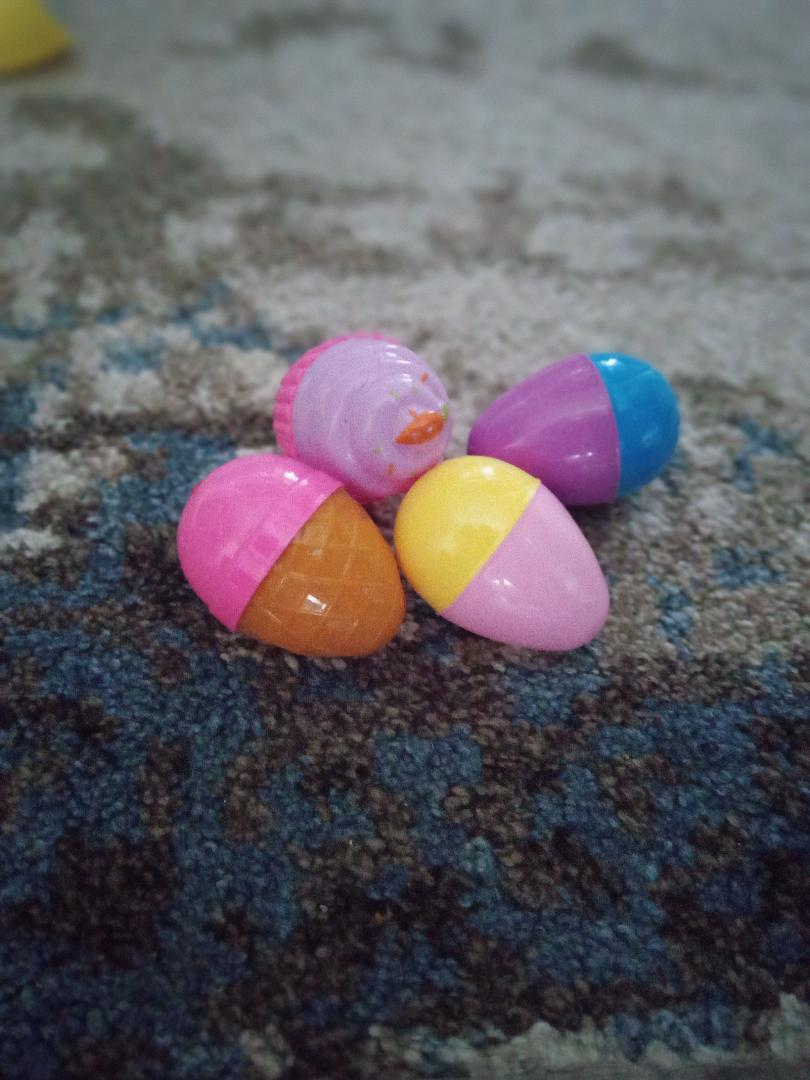
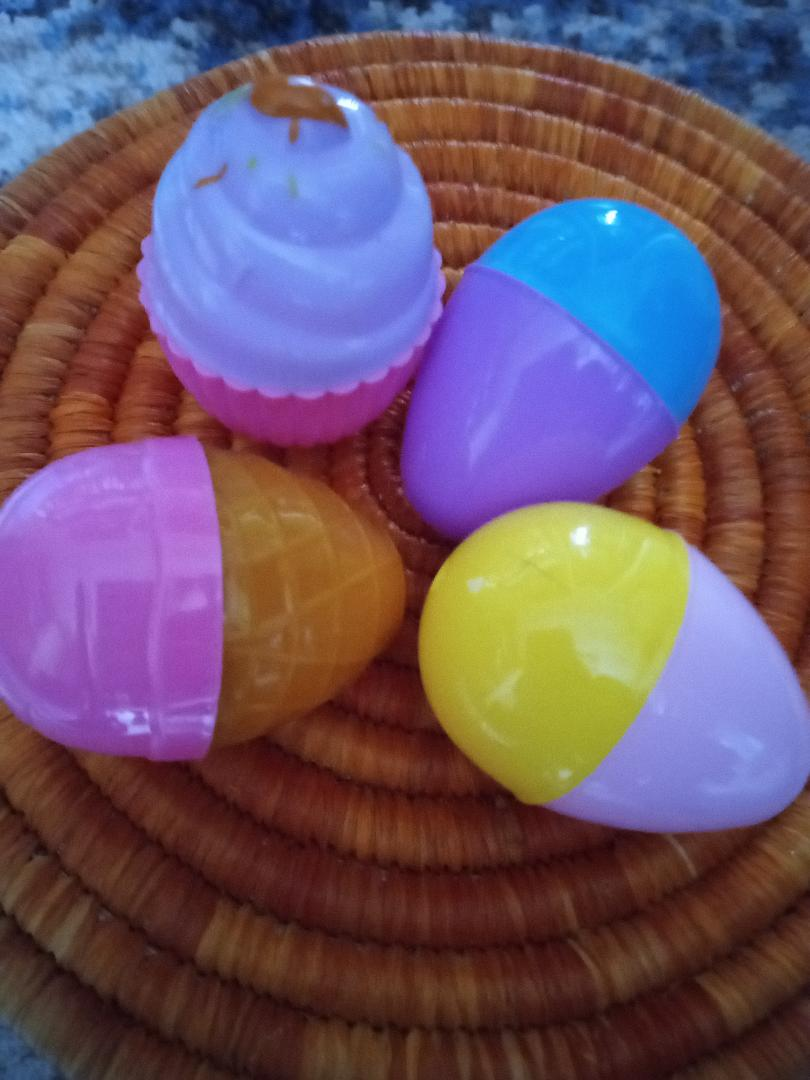
Challenge kids fine motor skills in egg assembly activities. The plain colored recycled plastic eggs are easier than the shaped ones like the ice cream ones shown in the picture which can be a little tricky. But it's important for development that some tasks be difficult, especially for special needs and students with autism. We teach to fear failure and frustration when we make things too easy, or do it for them. Children need challenges, to have to work at something and to try new approaches, to learn patience, perseverance and vital problem solving skills. 

Use assembled Easter eggs in science learning centers and preschool sand and water table to explore water displacement and floatation concepts. Give toddlers scooping tools to practice fine and gross motor skills in high chair activities. Special needs students will love "fishing" for Easter eggs too! 

Have kids "hide" little items or non-messy foods in recycled plastic Easter eggs. Or hide them yourself and have students predict what's inside. This teaches math skills of size estimation. 

Sort eggs in egg cartons, by color or design. Last year, when my husband and I visited our grandkids, we brought each child a set of individualized themed Easter eggs (dinosaurs, fish, desserts, sports balls and insects). Then we played an Easter egg hunt game in which each child had to find eggs in his pattern. The 3-year-olds, Lucian and Milo, were able to identify eggs that belonged in their pattern. And Ezra, who was almost two, was able to find his fishy Easter eggs by their color. Extend pattern lesson plans with free printable animal dominoes. 

Do an Easter egg hunt, using recycled egg cartons to place found eggs. Each child brings a dozen and finds a dozen. Once her 12 spaces are filled she "wins." A homeschool mom friend of my oldest daughter came up with genius plan. It prevents kids taking too many eggs and best of all teaches math skills. Have older kids group their eggs by two, three, four and six, to learn skip counting, multiplying and dividing. Reinforce with these free printable math flash cards. 

For more hands-on lesson plans and recycle bin activities stay tuned to this blog. 


Recycle bin Easter egg crafts to teach early math--with free printables


With Earth Day (now actually Earth Month) around the corner, I'm sharing lesson plans to make crafts from your recycle bin. Today we're making recycle bin Easter egg crafts to teach early math activities of sorting and matching, plus fine motor skills. These Easter egg crafts were inspired by my toddler grandchildren, Juno, Ezra and Emmett. 

As a homeschool mom, I was always looking for toddler high chair activities to keep the youngest busy learning while I did lesson plans with the older kids. Use these Easter egg crafts in math learning centers, as high chair activities or at a toddler picnic table for older more mobile preschoolers. I used one of the small Little Tikes picnic tables with our youngest. I rotated different preschool crafts and hands-on activities for her to work on. You could use the sand and water table also. 

For toddler Easter egg crafts (ages 1-2)  you're only going to need two things, which can be found in your recycle bin: plastic refillable Easter eggs and empty egg cartons. Assemble eggs for 1-year-old children and let them practice sorting into egg cartons. As they get older, children can begin assembling Easter eggs. Then at age 2-ish, they can match egg halves by color or pattern (we have some really cool ones shaped like sports balls, fish and ice cream!) These are great for developing fine motor skills. And saving Easter eggs from year to year is environmentally friendly so prefect for Earth Month. 

Also at age two, or whenever they no longer put things in their mouths, they can begin filling Easter eggs with tiny objects or shapes. Children might cut shapes from recycled cardboard or paper, to practice scissors skills. They might also use shape punches. Extend this into a fun preschool snack craft by giving them little snacks to hide in eggs (fish crackers, letter pretzels, etc.)

Here are free printable Earth Day activities and here's my page of free printable Earth Day lesson plans, crafts and activities. Lastly, here's my collection of lesson plans for Earth Day trash crafts Stay tuned for more Earth Month activities! 


Stone Soup lesson plans, activities and printables, plus Friendship Soup recipes


 Looking for interactive, hands-on activities to revive a winter weary preschool or elementary age curriculum? How about a unit on "Stone Soup?" Here are free printable Stone Soup lesson plans, activities, coloring pages, crafts and recipes for Friendship Soup from the beloved children's literature classic. 

There are several versions of Stone Soup, my favorite being the Marcia Brown Caldecott one (shown above). In this story, stingy villagers learn the value of collaboration and the whole is greater than the sum of the parts when three hungry soldiers con them into to sharing their hoarded food to make a group soup. 

Begin by reading Stone Soup aloud. Children should predict what will happen using HOTS (higher order thinking skills). Kids will love the ah-ha moment when they realize, (before the greedy villagers do) that the hoarders have just been tricked into parting with food they lied about not having. 

Next, assign kids character parts and retell Stone Soup as a  play. Let children design costumes and create props and scenery from the recycle bin. Recycled cardboard fridge boxes make awesome backdrops which children can paint. Present this as a play to other students. 

After the play, serve Stone Soup (which has now become Friendship Soup) that you have made as a class. Allow students to prep vegetables or simply bring canned vegetables to reheat. Children might also prep vegetables and home. Teacher should probably bring the cooked meat if you're going to include it. Also, provide washed stones to use in soup (large ones so no one accidentally swallows). Simmer ingredients in a crockpot while doing other activities. 

Write Stone Soup recipes for process writing lesson plans. Ingredients include: cooked meat, milk, carrots, celery, potatoes, cabbage, onions, salt, pepper and stones. Encourage kids into writing creatively to produce funny or silly recipes. Create cartoon strips or story boards. Make a Stone Soup word wall, using words from the story. Cooking with children and writing and following recipes make excellent math lesson plans. 

For science lesson plans, explore food groups or edible plant parts (carrots and potatoes--roots, onions--bulb, celery--stem and leaves, cabbage--leaves, pepper--seeds). Explore raw vegetable colors, textures, and structure. Draw plant diagrams.